
International Cooperative Human Resource Development Program for Realizing Sustainable Asian Fisheries and Marine Environment / AFIMA Leaders Program Student Achievement Presentation 2025
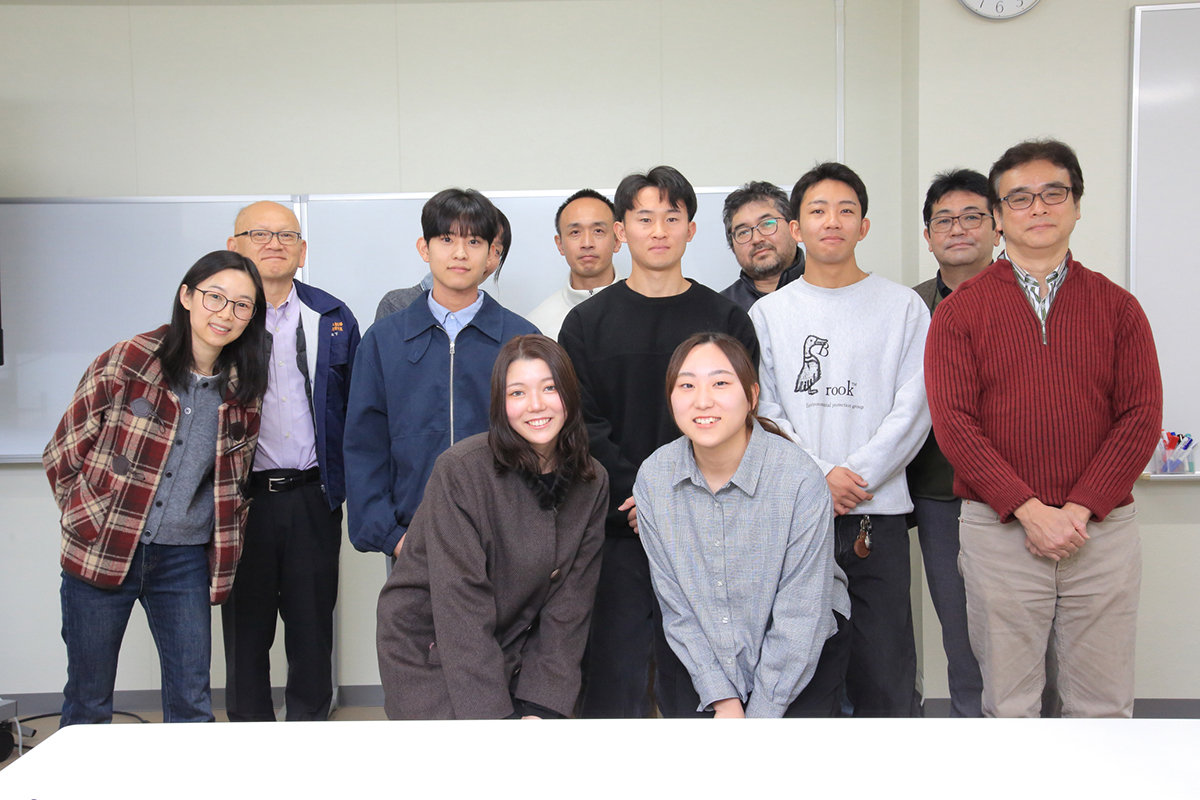
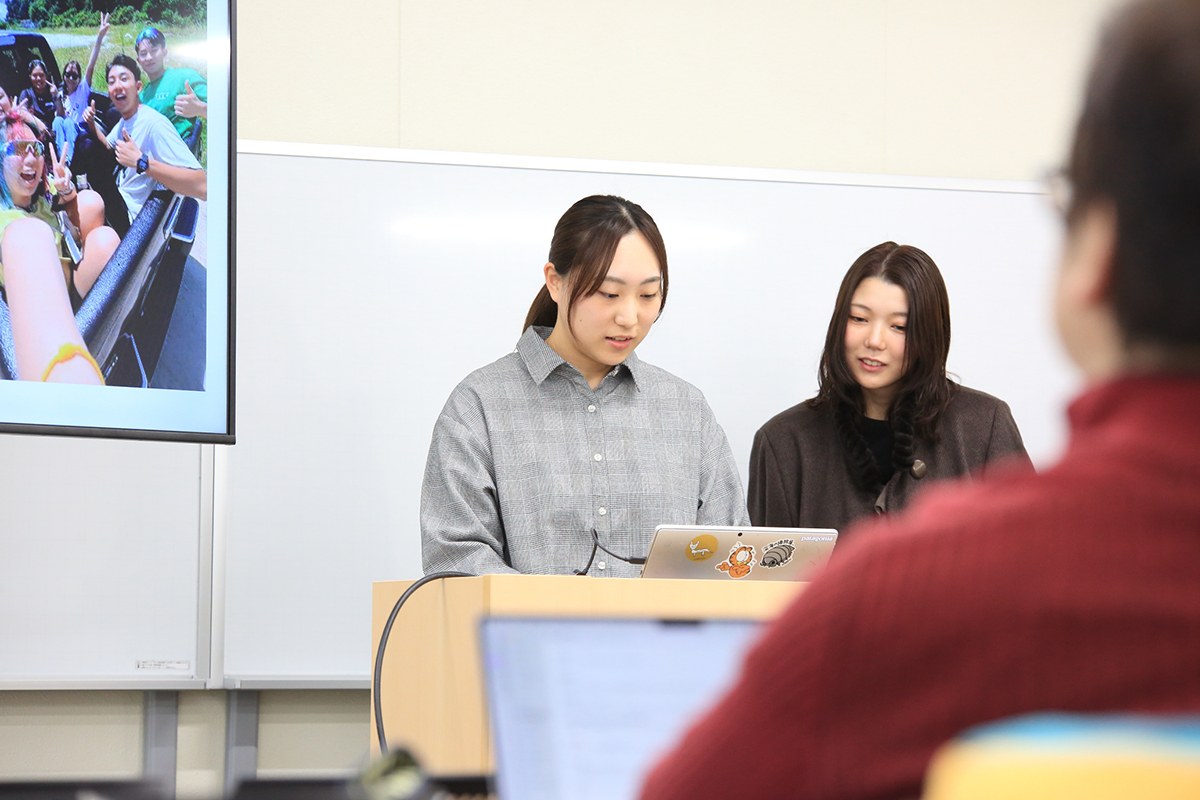
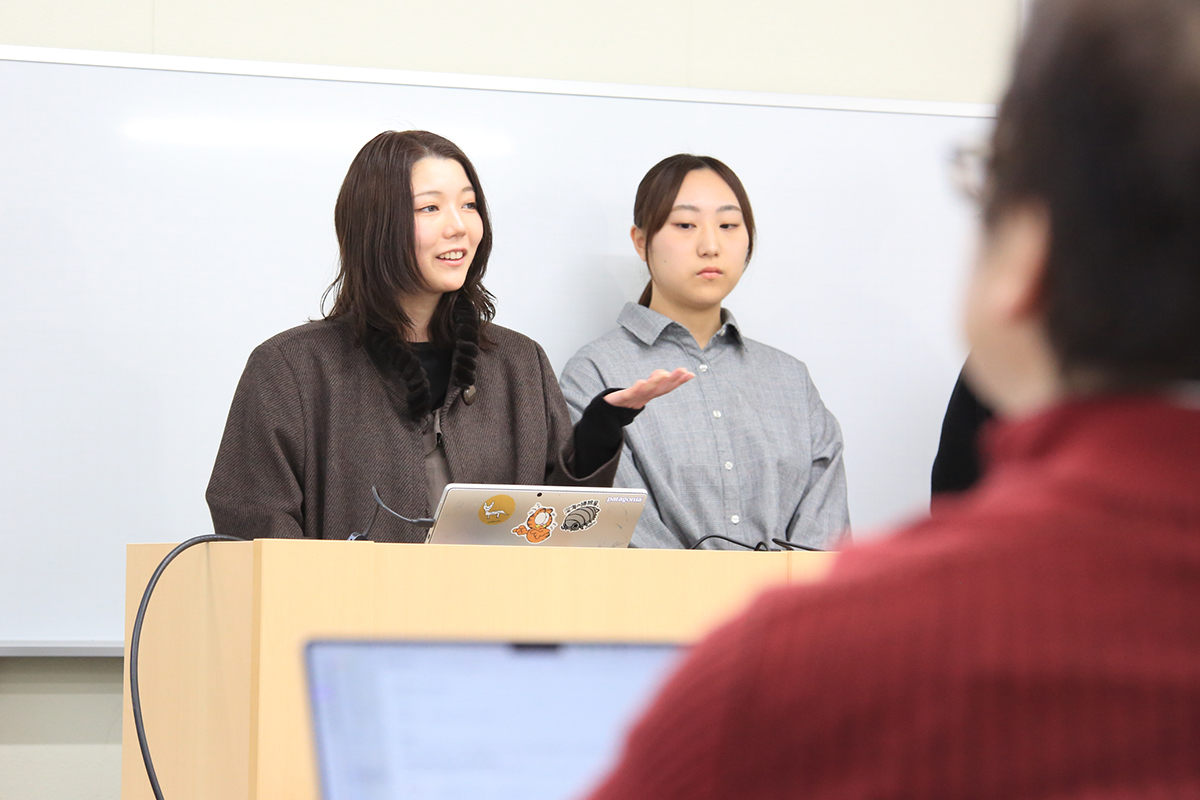
In the summer of 2025, 5 students from Nagasaki University studied abroad in the AFIMA Leaders Program for a short period of time.
The students presented the results of their studies at Universiti Malaysia Trengganu and Pukyong National University.
Here are the contents of each presentation.
【Studied at Universiti Malaysia Terengganu for about 3 months】
Internship Period: August 9, 2025 to October 24, 2025
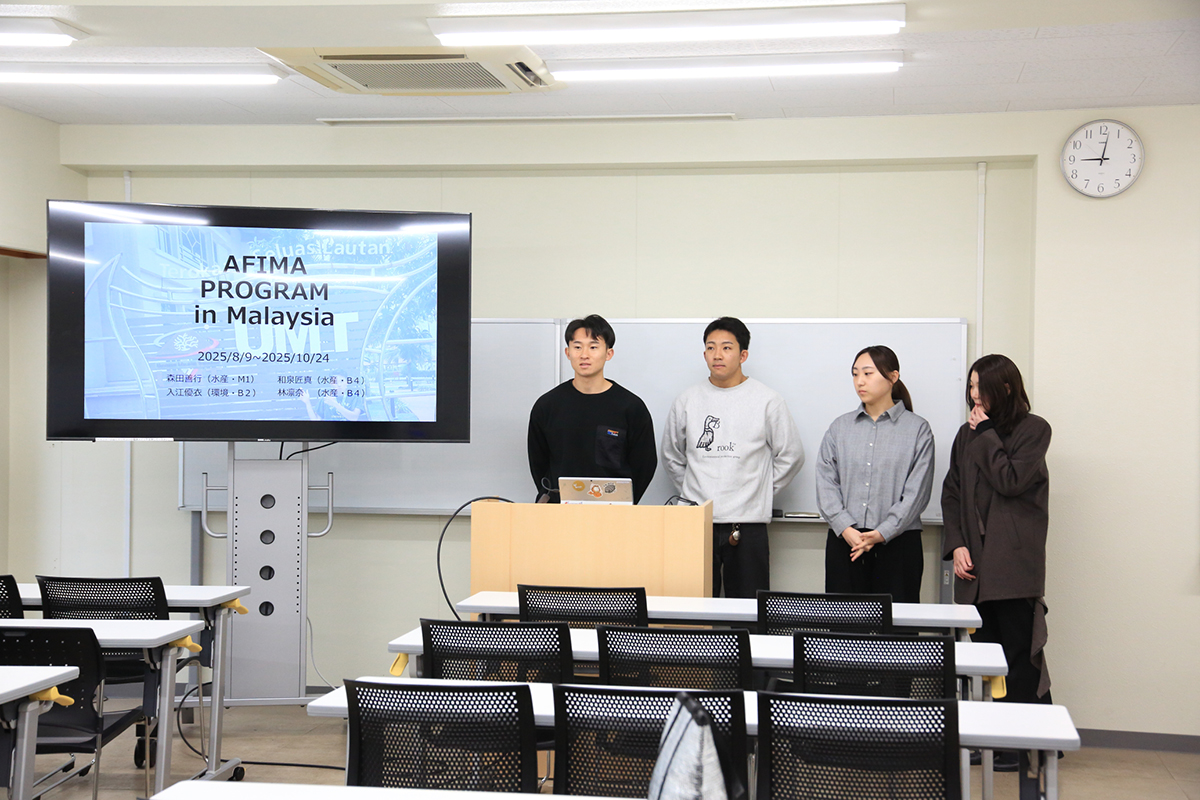
From left to right: Yoshiyuki Morita, Shoma Izumi, Yui Irie, Rinna Hayashi
Artificial Insemination of Fish
Aquaculture Production of Ornamental Fish
Experience the Diversity of the Sea’s Bounty
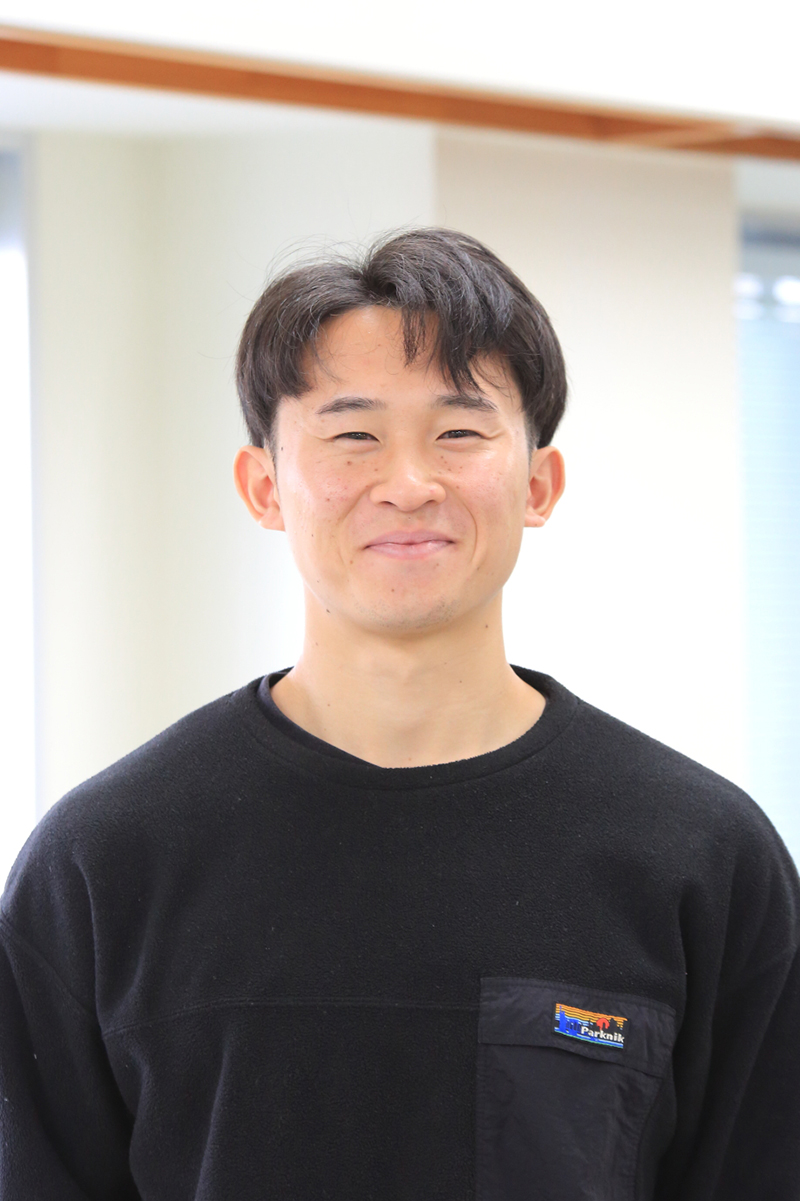
Yoshiyuki Morita
Graduate School of Integrated Production Science Master’s Program, 1 year
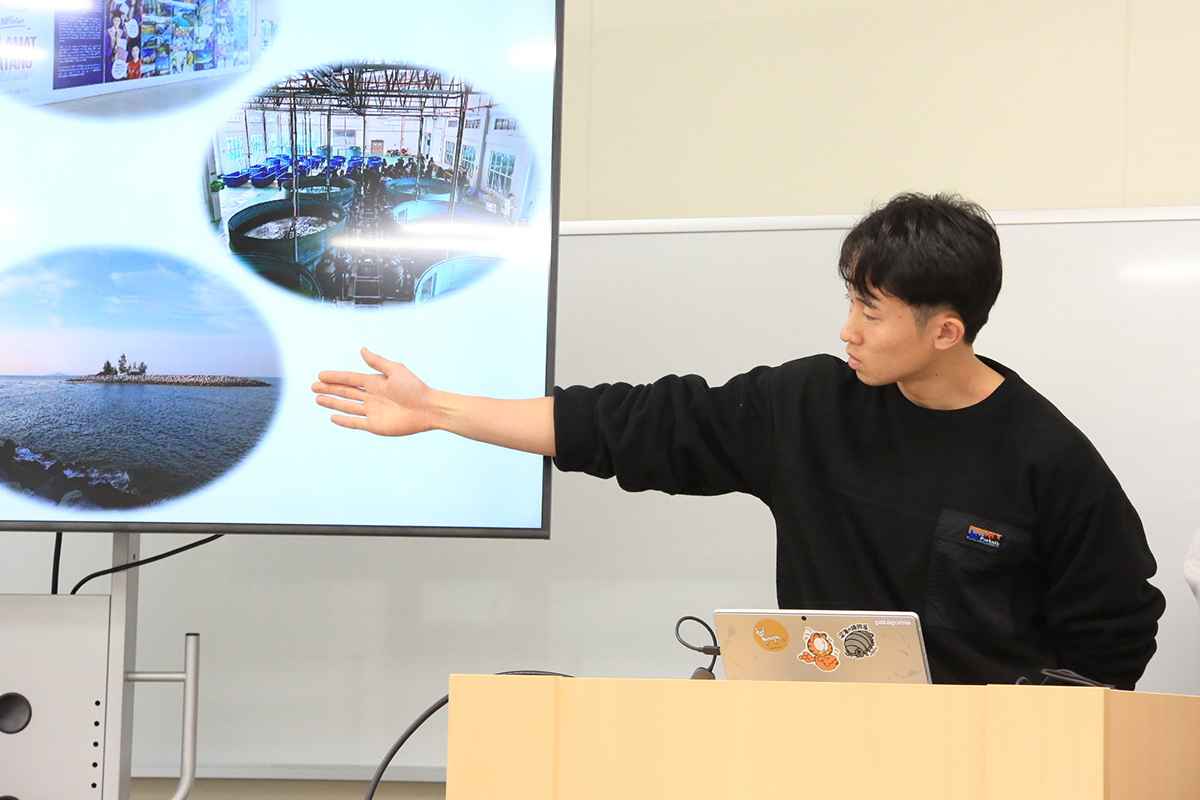
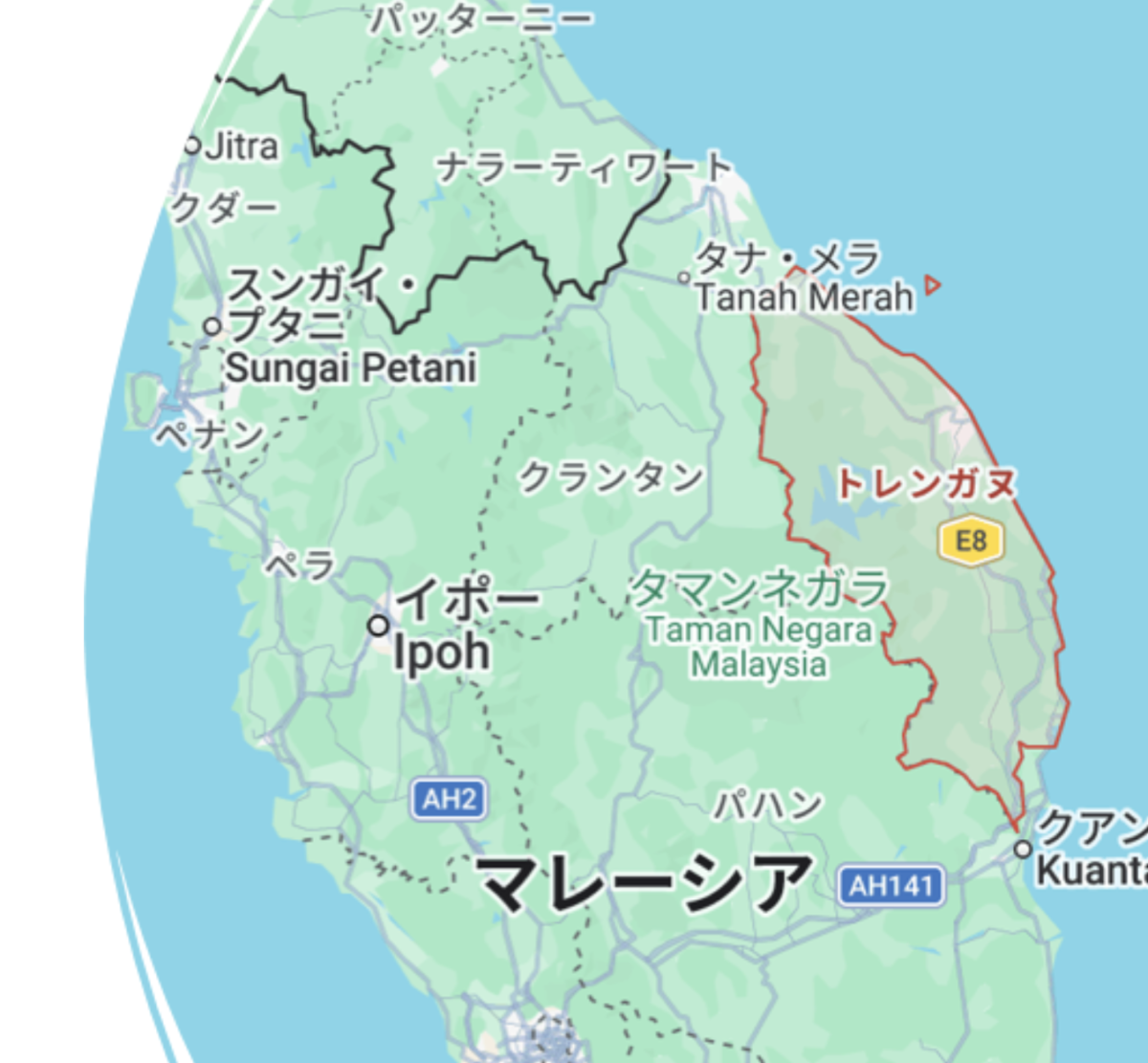
The state of Terengganu is located on the east coast of the Malay Peninsula, boasting vast expanses of magnificent nature. One reason I chose Universiti Malaysia Terengganu as my study abroad destination was because I was drawn to this rich natural environment. Furthermore, the majority of the state’s residents are Muslim, making it a region where Islamic culture remains deeply rooted. A unique aspect of Malaysia is that each state has its own royal family, and the representative of this royal family also serves as the King of the country. The state we stayed in also had its own royal family.
Universiti Malaysia Terengganu is a national university with a strong focus on marine studies, conducting global education and research. It offers faculties in Computer Science, Aquatic Food Science, Accounting and Management, and Aquatic Engineering. This time, I participated in classes within the faculties related to Fisheries Science and Aquaculture.
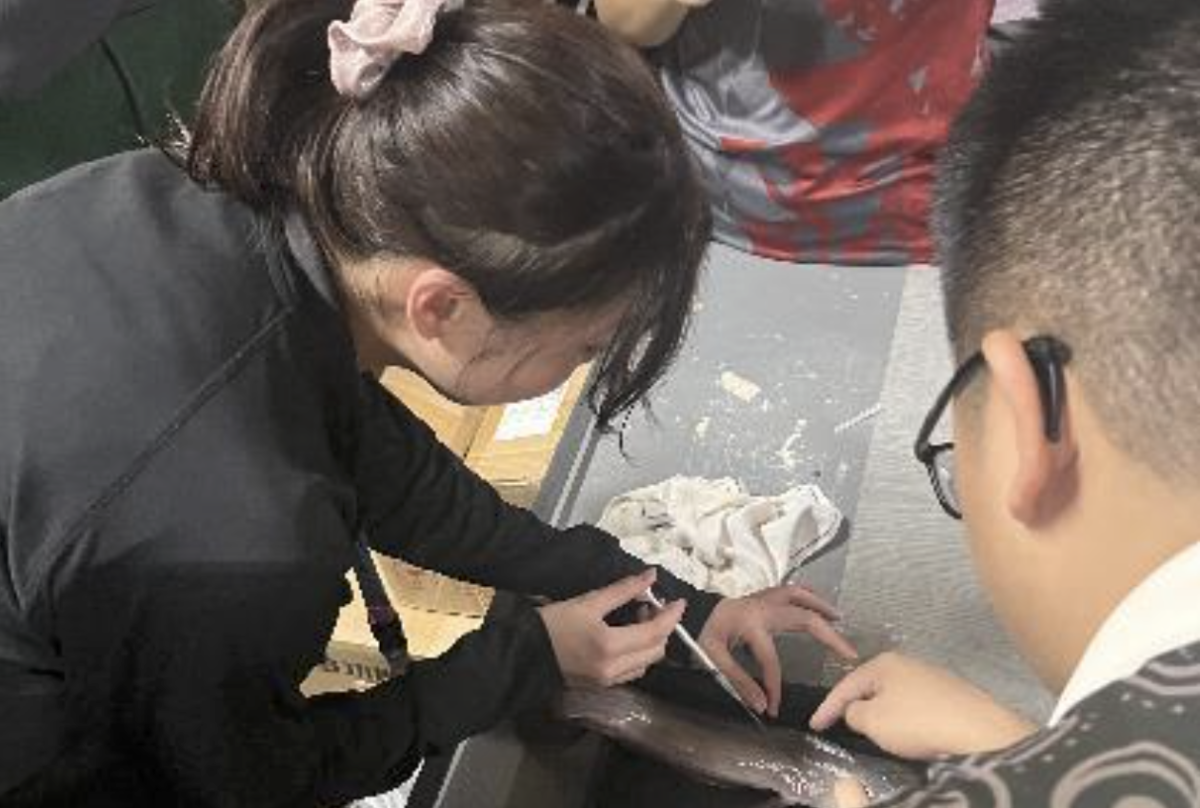
For the first two weeks, I participated in a summer school program for students from National Taiwan Ocean University and Mie University.
In Malaysia, I experienced artificial insemination of American catfish, a major aquaculture species. We collected eggs from fish that had received hormone injections the previous day, collected sperm from males, and fertilized the eggs. We then observed embryo development. This fish is remarkably resilient to environmental stress; it was impressive to see them swimming vigorously even in tanks without aeration.
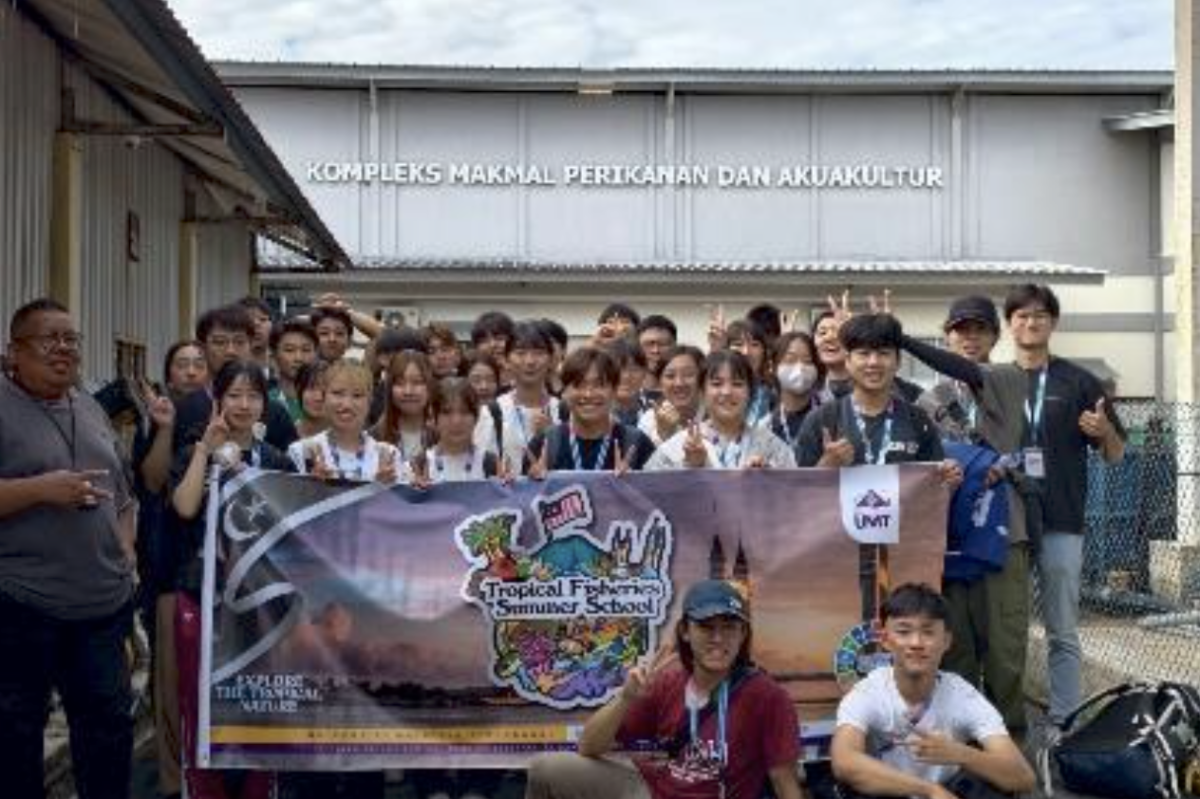
For the first two weeks, I participated in a summer school program for students from National Taiwan Ocean University and Mie University.
In Malaysia, I experienced artificial insemination of American catfish, a major aquaculture species. We collected eggs from fish that had received hormone injections the previous day, collected sperm from males, and fertilized the eggs. We then observed embryo development. This fish is remarkably resilient to environmental stress; it was impressive to see them swimming vigorously even in tanks without aeration.
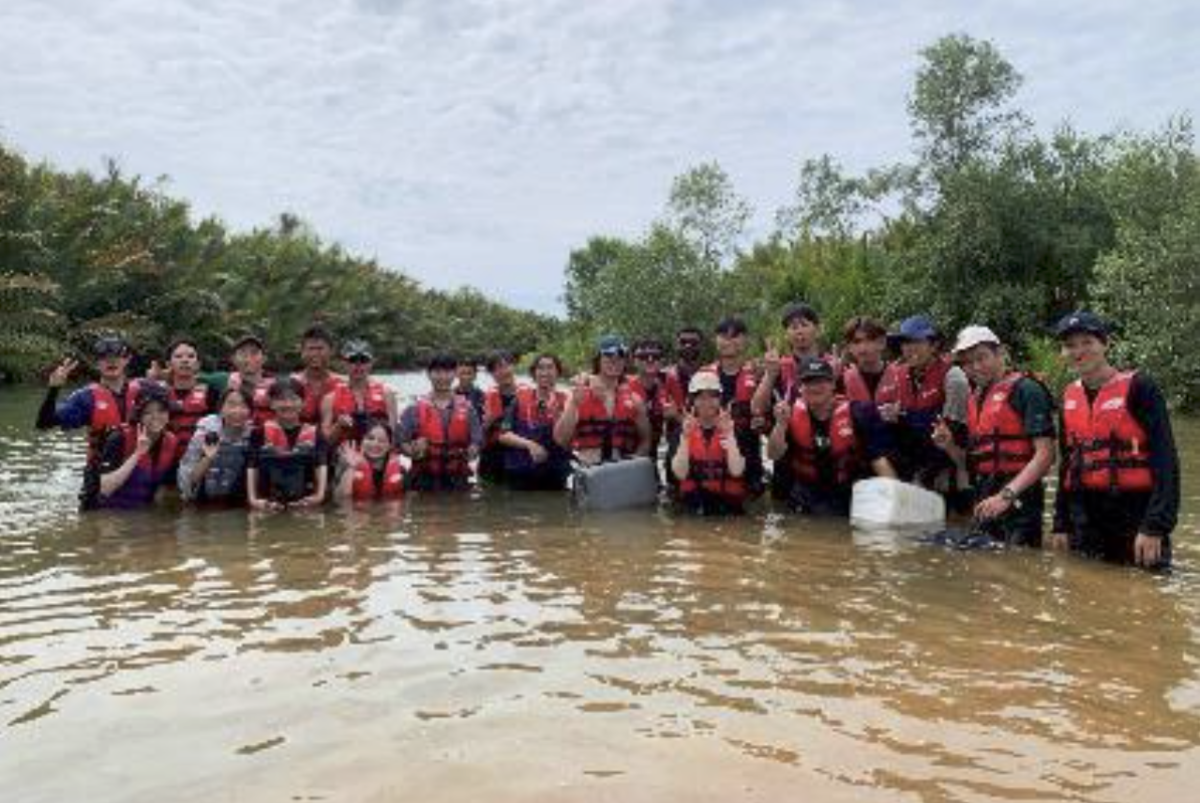
During the mangrove walk, I encountered plants not found in Japan. What surprised me was collecting palm-sized clams. We later grilled them over charcoal and ate them. They tasted delicious, without any muddy flavor.
I learned about the future of fish
nurtured by mangrove ecosystems
and improved water quality.
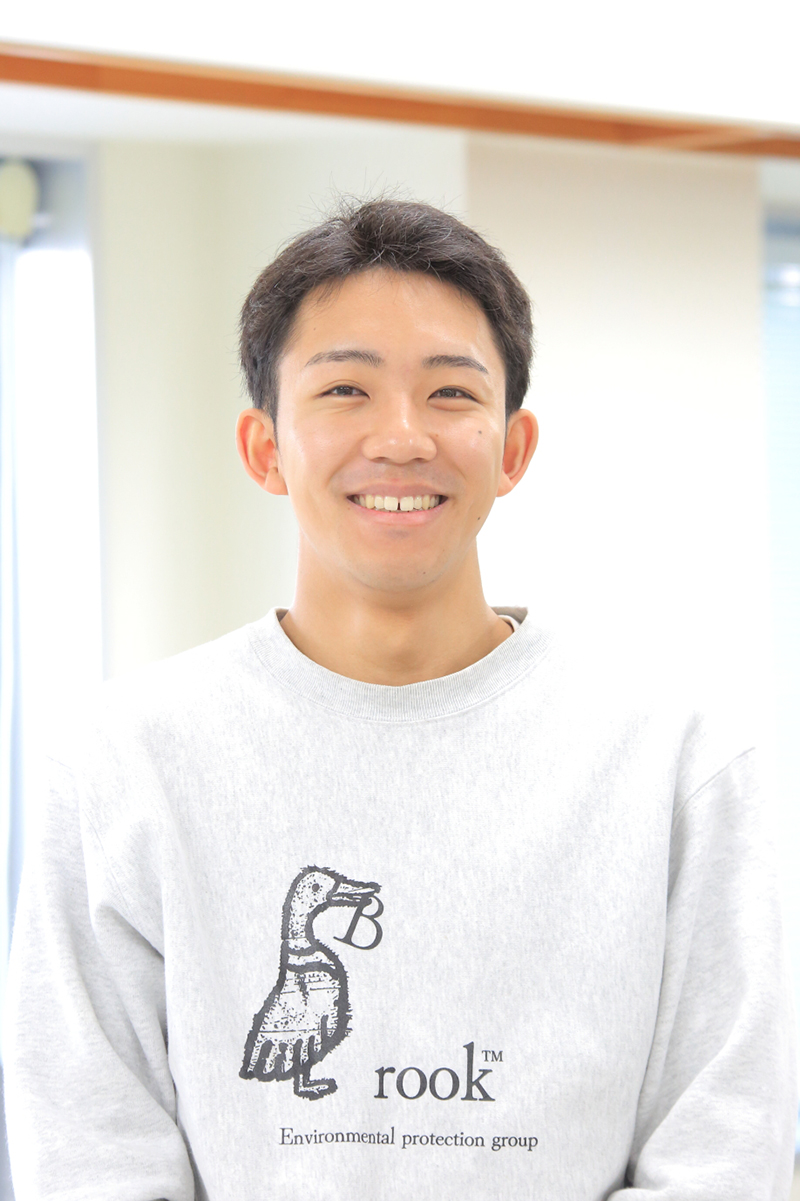
Shoma Izumi
Faculty of Fisheries Sciences, 4th Year
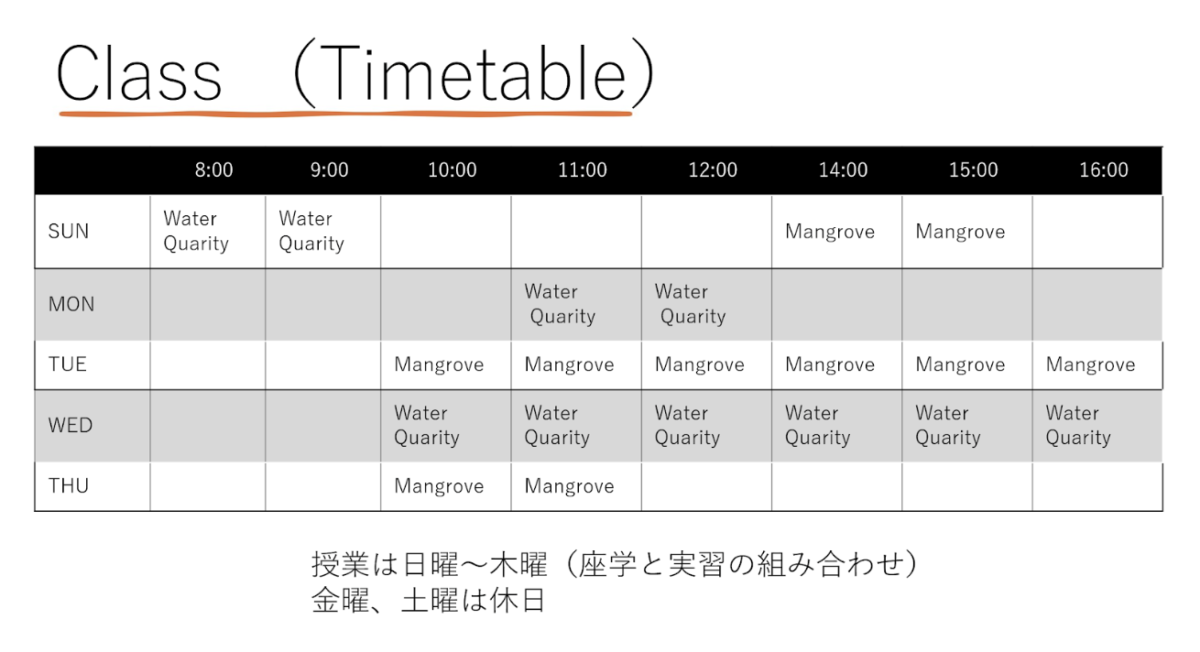
Classes are held from Sunday to Thursday, unlike in Japan, with Friday and Saturday being holidays. Each class session combines lectures and practical training (experiments). I took three courses: Water Quality Management, Mangrove Ecology, and Business Administration.
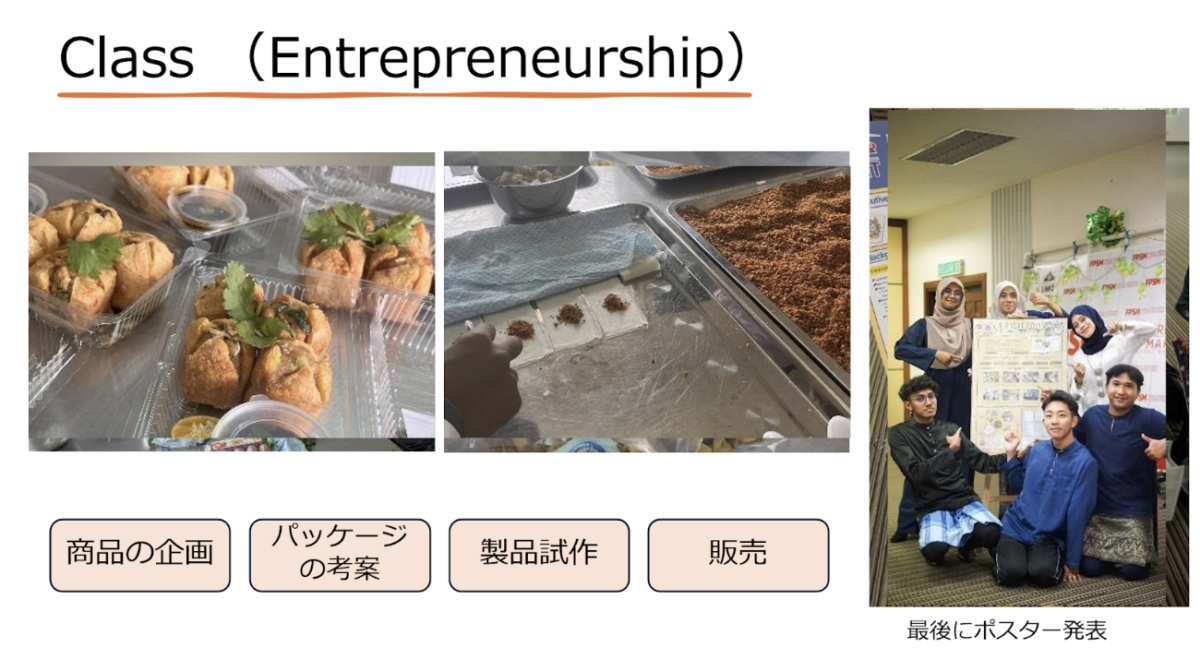
In Fisheries Management, we practiced the entire process from planning a product, designing packaging, manufacturing the item, to selling it. Divided into groups of five or six, we replaced the filling of a traditional dish called “TAUHU” with tuna. We also considered nutrients and raw material costs to create a solid profit-making system. Finally, we were able to present this entire process through a poster presentation.
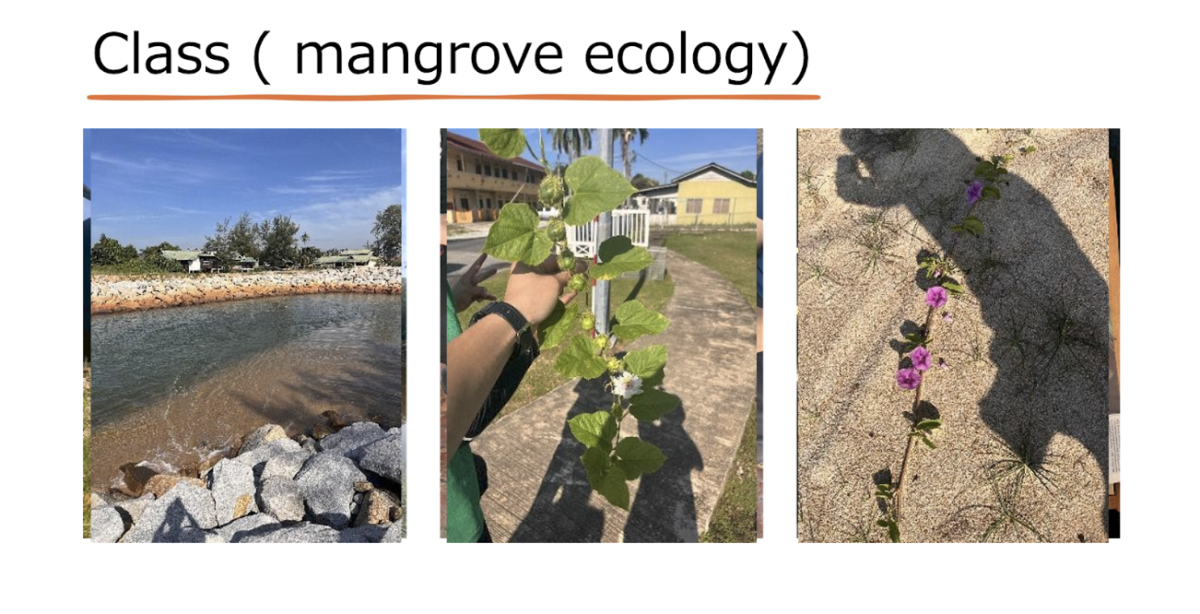
I learned about the ecology of mangroves, which are not very familiar in Japan. It was fascinating to learn about the various strategies mangrove seeds employ—some float and drift before sinking to extend roots into the ground, while others sink immediately and take root. I also learned that mangroves are extremely sensitive plants, requiring a delicate balance between saltwater and freshwater, making salinity critically important.
The university grounds feature various mangrove species, and the professor took us on a field trip. It was fascinating to see the different types and receive detailed explanations about each one.
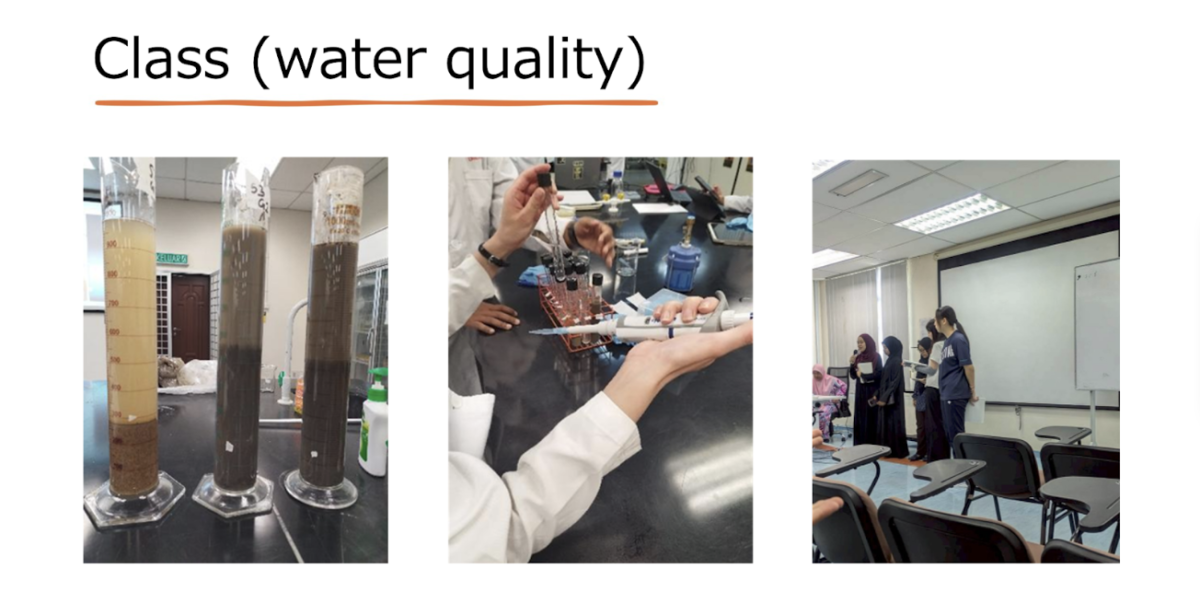
Water Quality Management taught me the key elements for managing water quality, as the name suggests. We learned various methods: physical purification, chemical purification, and purification using bacteria. We also studied effective methods for improving water quality in aquaculture farms. Furthermore, I learned about systems that remove impurities from aquaculture water and reuse it for purposes like vegetable irrigation, preventing waste and enabling nutrient recycling. In Malaysia, where aquaculture is thriving, I learned that improving water quality is an essential process for raising higher-quality farmed fish.
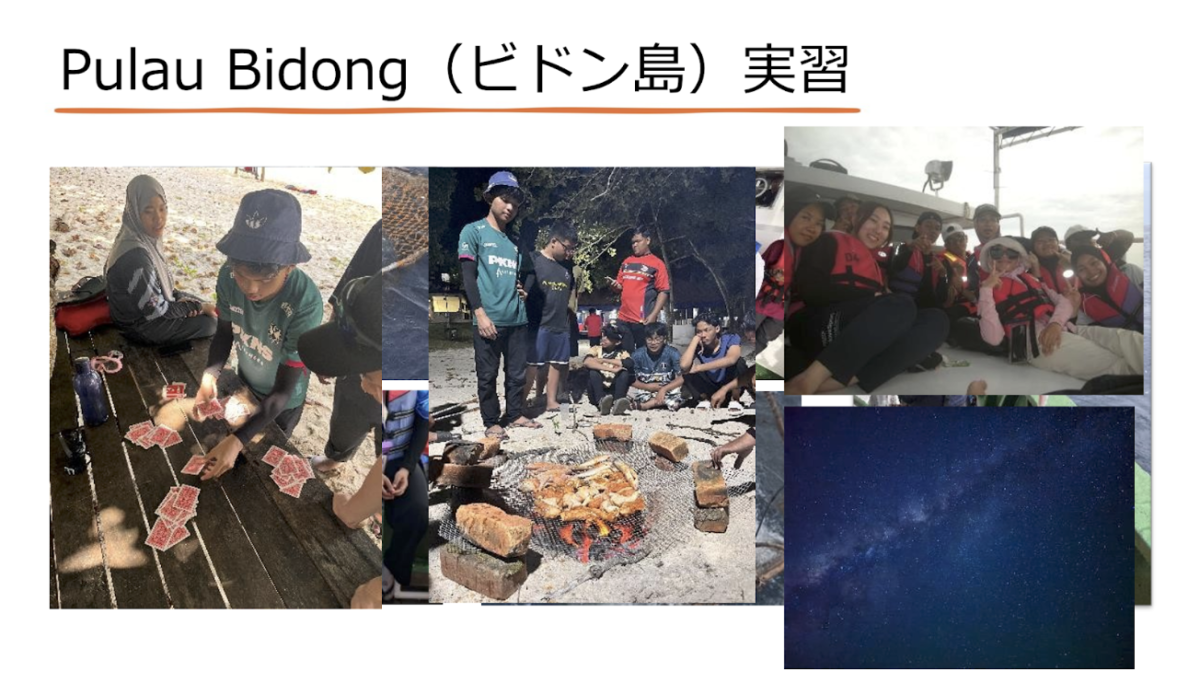
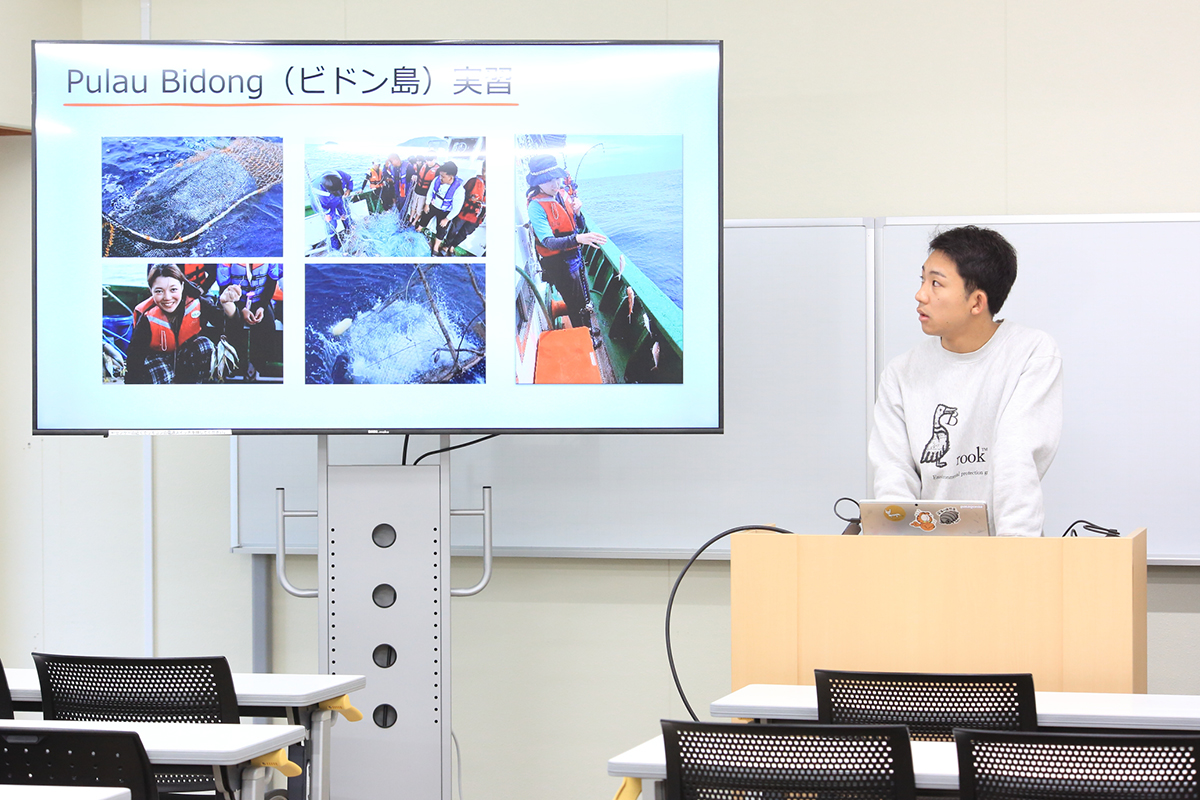
From September 25th to 28th, I went to Bidon Island for field training. On the island, we mainly experienced traditional Malaysian fishing methods. We did trawling, gillnetting, and cage netting. It was interesting to see many fish species rarely seen in Japan. I was surprised that we had to pull up the trawl net by hand. The gillnet got caught on coral or something and came back completely torn.
On the island, we enjoyed various activities like sabiki fishing, barbecues, and playing Malaysian card games. Diving into the sea revealed a breathtaking world where beautiful coral and fish coexist, leaving me deeply moved.
I learned about the current state of microplastics and fish
and deepened my research on human activities and the marine environment.
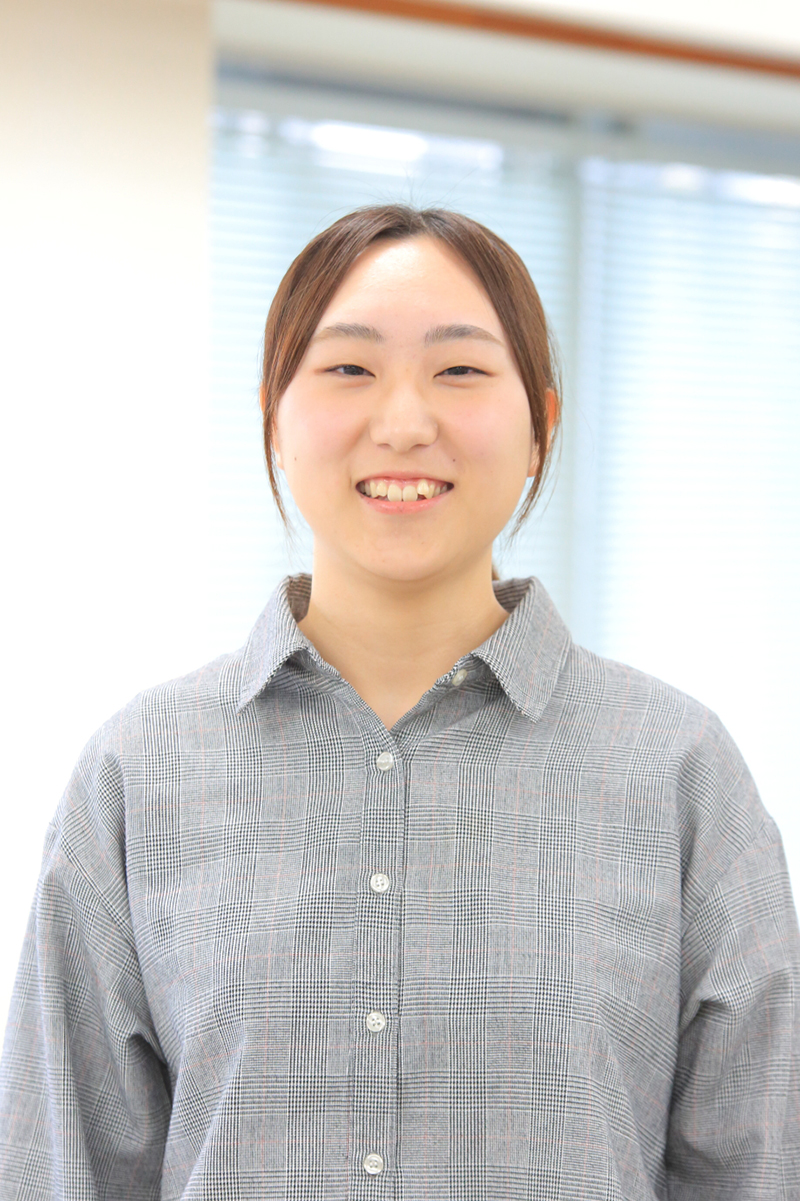
Yui Irie
Faculty of Environmental Science, 2nd Year
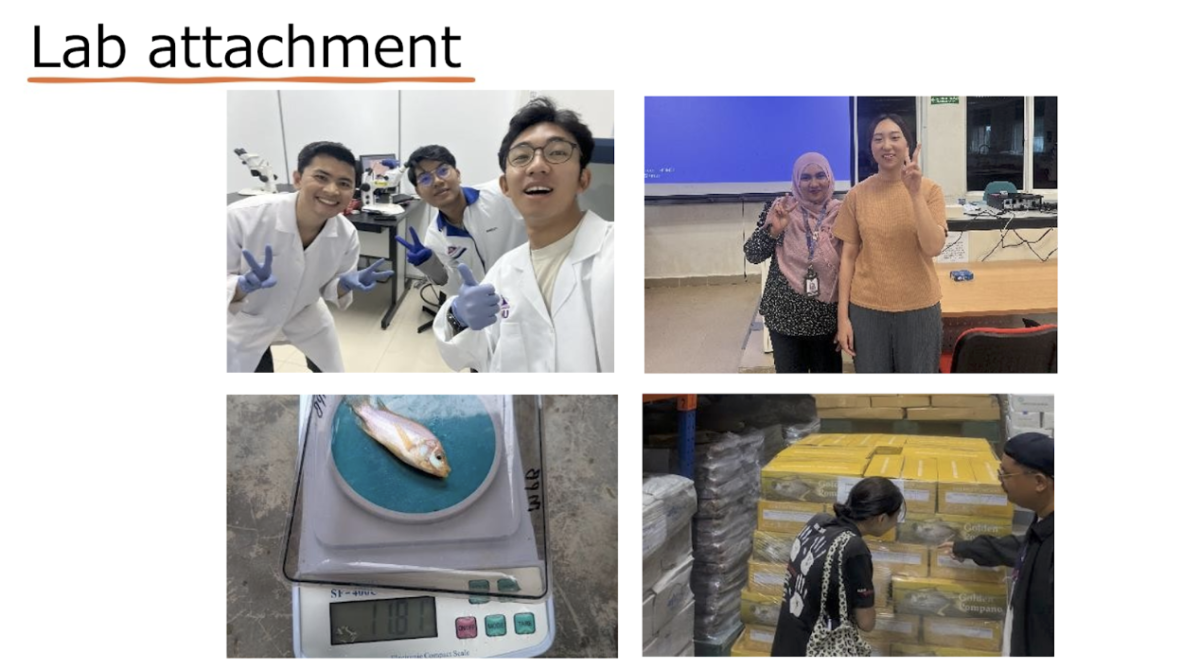
I participated in a lab internship for about a month, researching microplastics embedded within fish muscle tissue. Starting from purchasing fish at the market, I conducted quite thorough research: dissecting them, dissolving the tissue with KOH, filtering the residue, and observing it under a microscope. Microplastics were observed in all fish, clearly demonstrating the impact of human activity on them. Since my graduation research focused on the ingestion of macroplastics, this experience allowed me to gain significantly more knowledge.
Experience the culture of that country
Continue engaging in numerous exchanges
and challenges
Rinna Hayashi
Faculty of Fisheries Sciences, 4th Year
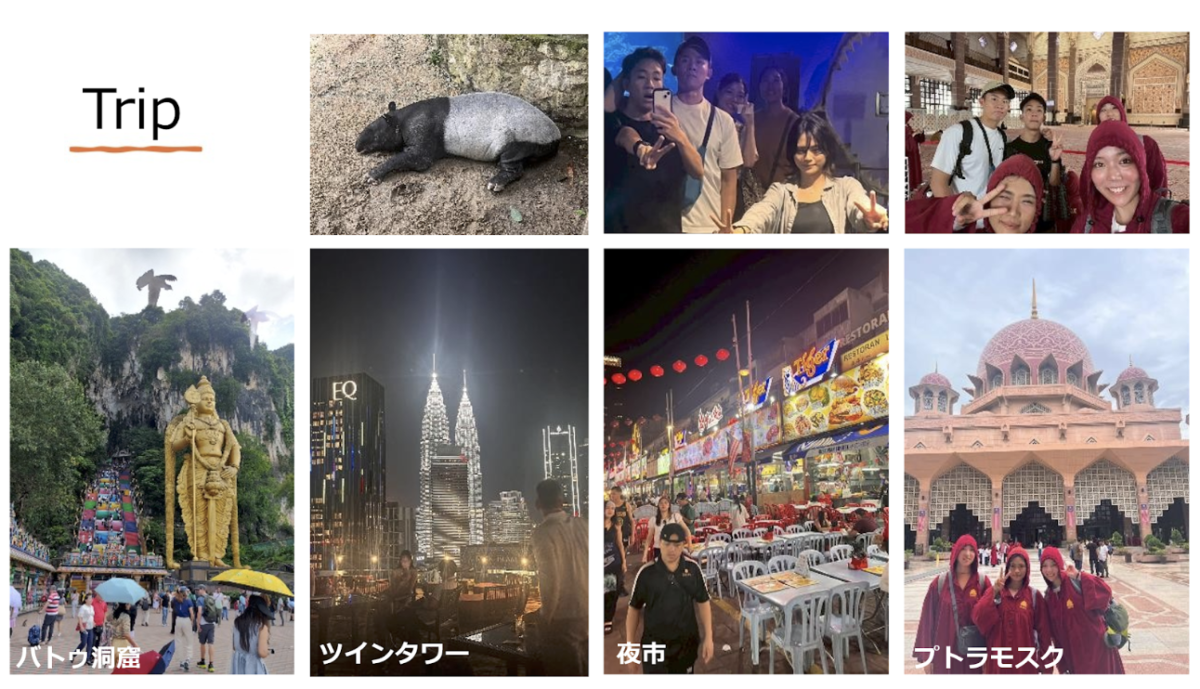
Between classes and research, we all took a trip to Kuala Lumpur. We visited Batu Caves, the zoo, the Twin Towers, night markets, the Putra Mosque (known as the Pink Mosque), the aquarium, Central Market, and Pavilion, a commercial complex. Since Terengganu has a higher proportion of Muslims, we could really feel the diverse Kuala Lumpur society where Hinduism, Buddhism, and various cultures coexist. It was hard to believe that nature-rich Terengganu and structure-filled Kuala Lumpur were truly part of the same country.
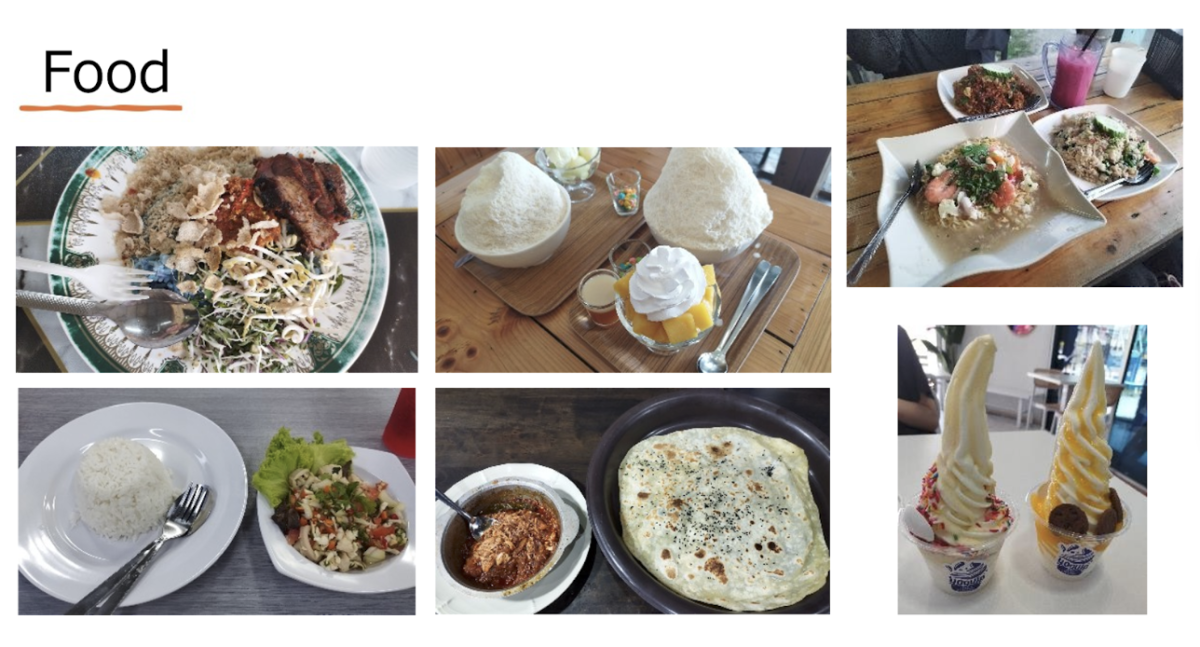
Here’s a list of delicious foods I tried in Malaysia. Nasi goreng comes in so many varieties that I never got bored eating it daily. I also tried shaved ice shops and Arab restaurants, challenging myself with dishes rarely found in Japan. Since Malaysian food tends to be quite spicy, I think they balance it out with the sweetness of their drinks.
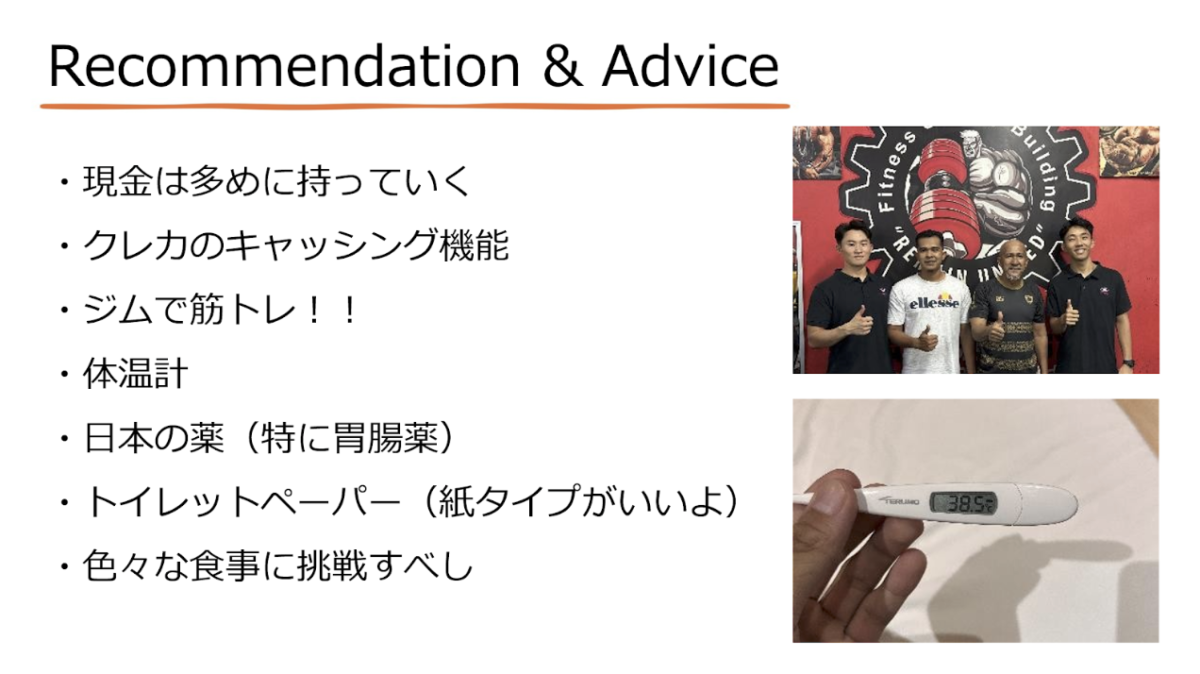
Research is important, of course, but when you visit a foreign country, be sure to immerse yourself in its culture—try new flavors, ingredients, and everything else! Keep challenging yourself!
【Studied at Pukyong National University for about 4 months】
Internship Period: August 29, 2025 to December 20, 2025
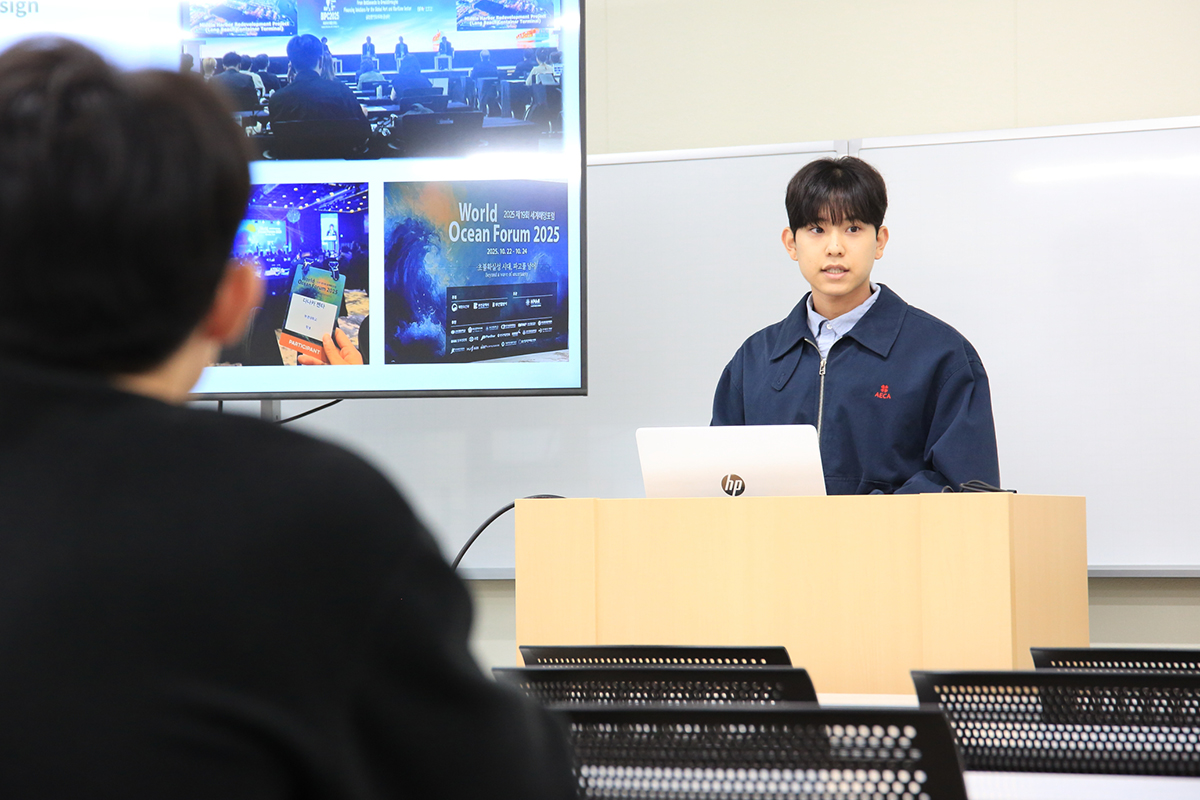
The biggest change within myself
is my attitude of tackling things head-on without hesitation.
I am grateful for all the encounters.
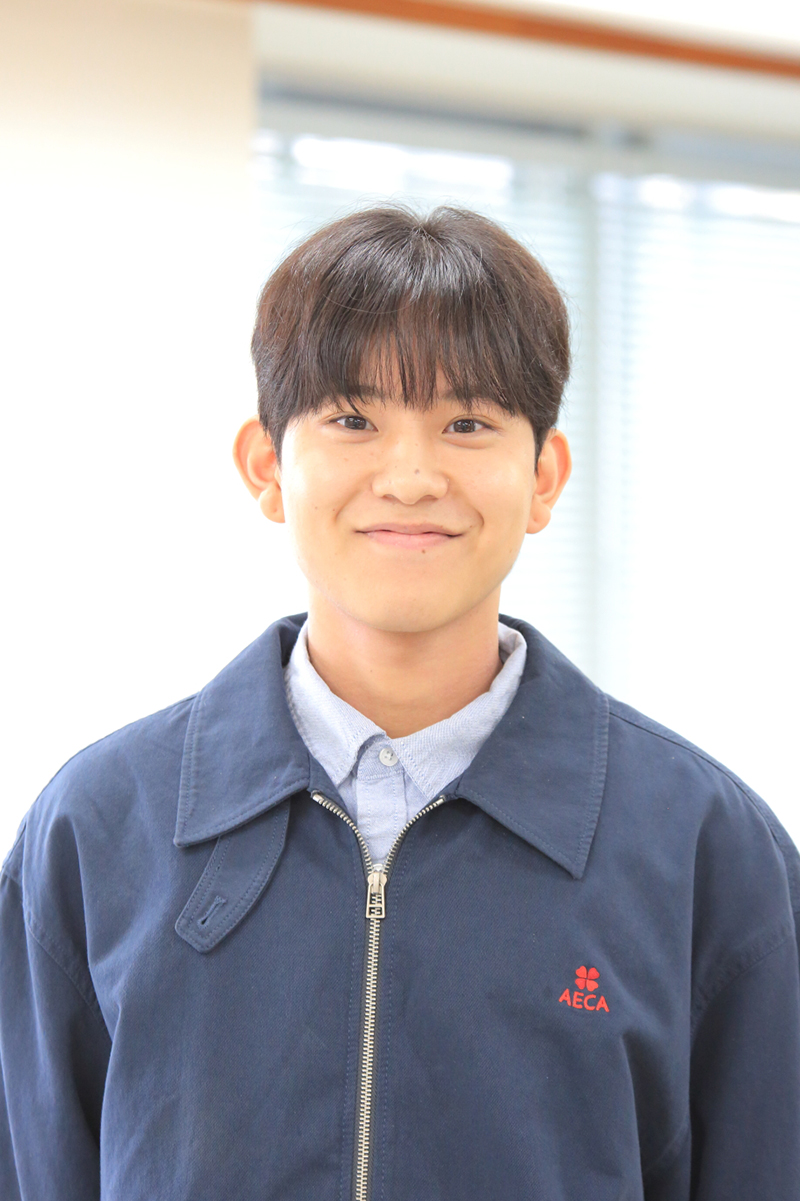
Tanaka Zenta
Faculty of Fisheries Sciences 3rd Year, Marine Future Creation Course
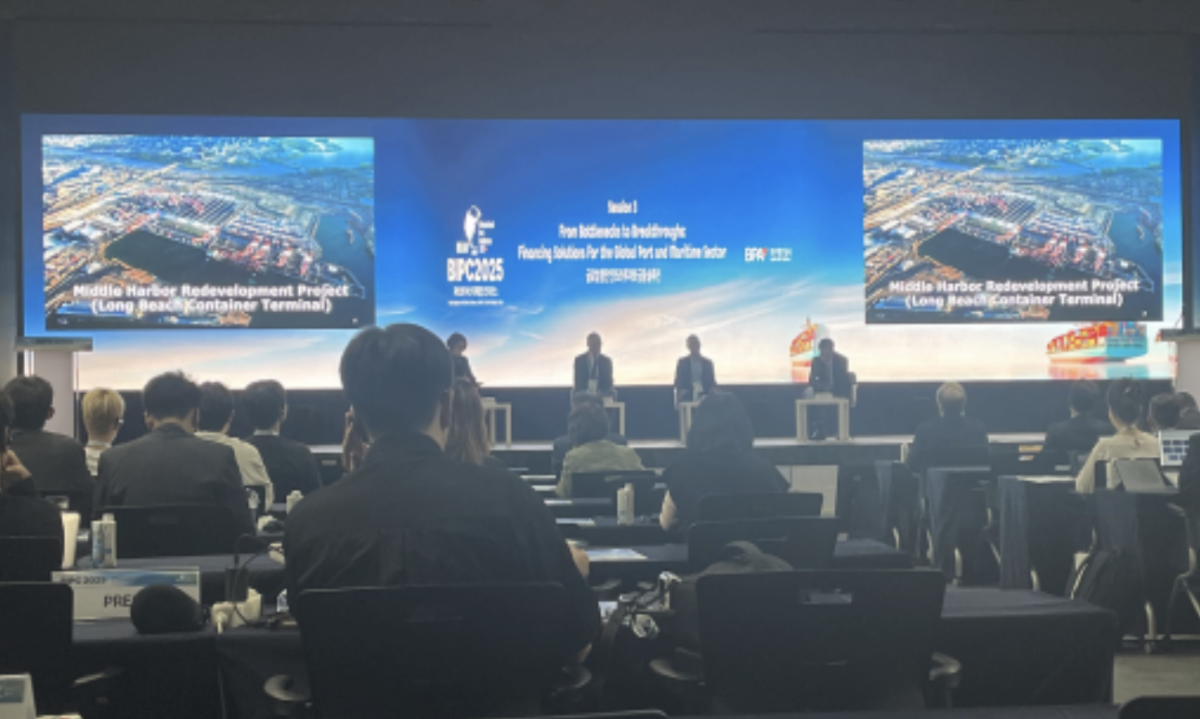
In the Capstone Design course I participated in, we independently identified challenges within the marine and fisheries sector, developed solutions through repeated team discussions, and ultimately presented our findings. We also had opportunities to participate in international events, present team projects, and engage in cultural exchange. Beyond specialized knowledge, collaborating with students from diverse backgrounds made me keenly aware of differences in how we approached problems and conducted discussions. What particularly stood out was the importance of holding your own opinions while simultaneously striving to understand others’ perspectives. This course made me appreciate the value of learning in an international setting, even more than the specialized knowledge gained.
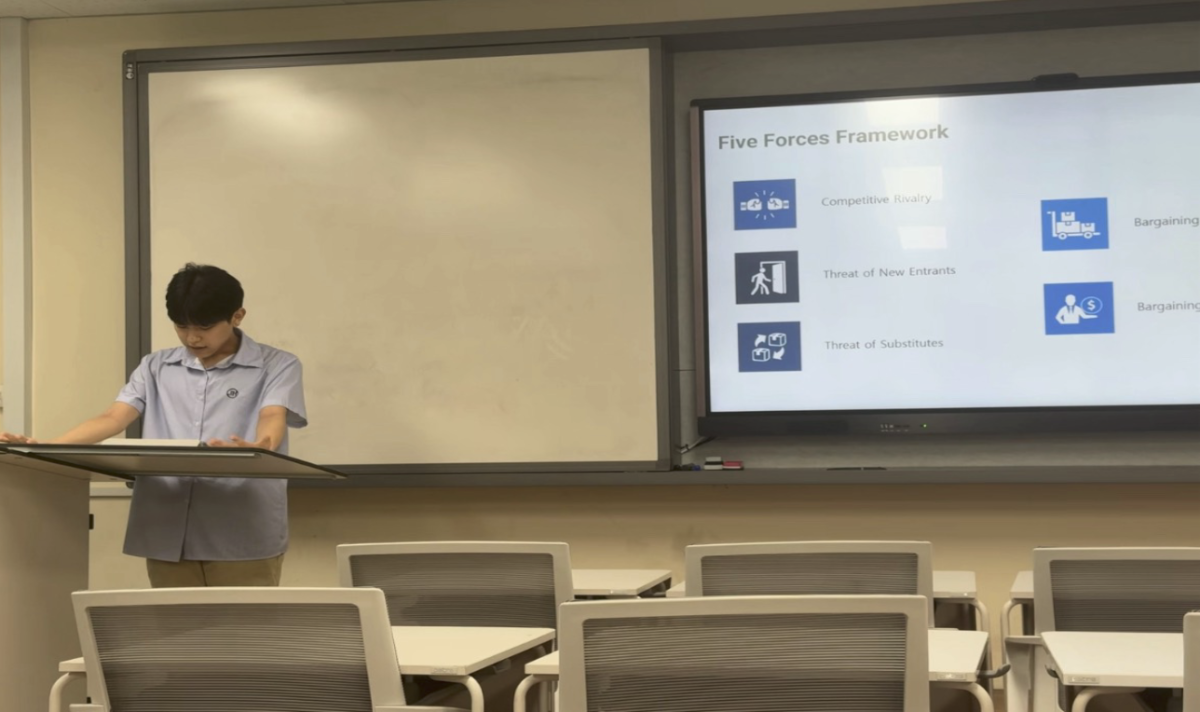
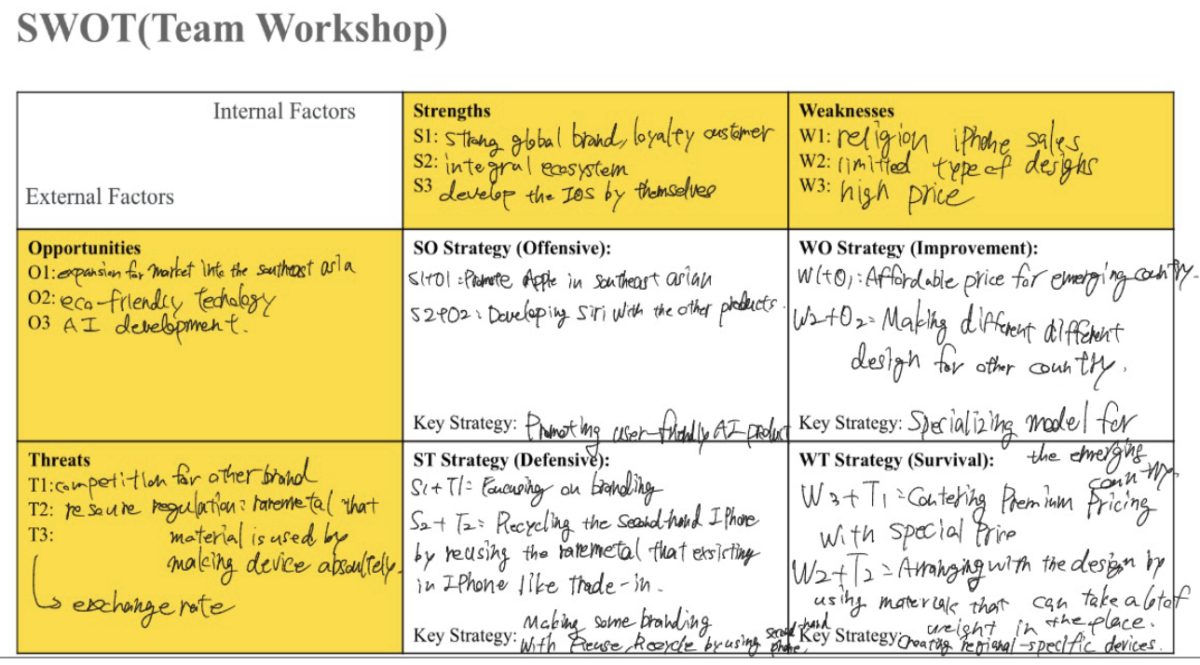
In “Sustainable Fisheries Market Theory,” I learned about approaches to developing, processing, and distributing not only seafood but all food products to stimulate consumer purchasing motivation. Particularly, the content covering marketing strategies in seafood distribution and international market trends sparked a deeper interest in my specialty, fisheries economics. Furthermore, as this course was conducted in English, presenting in English and exchanging opinions with multinational students made me keenly aware of both the difficulty and importance of articulating my thoughts. It was not just learning the theory, but the very process of communicating it to others that became a significant learning experience.
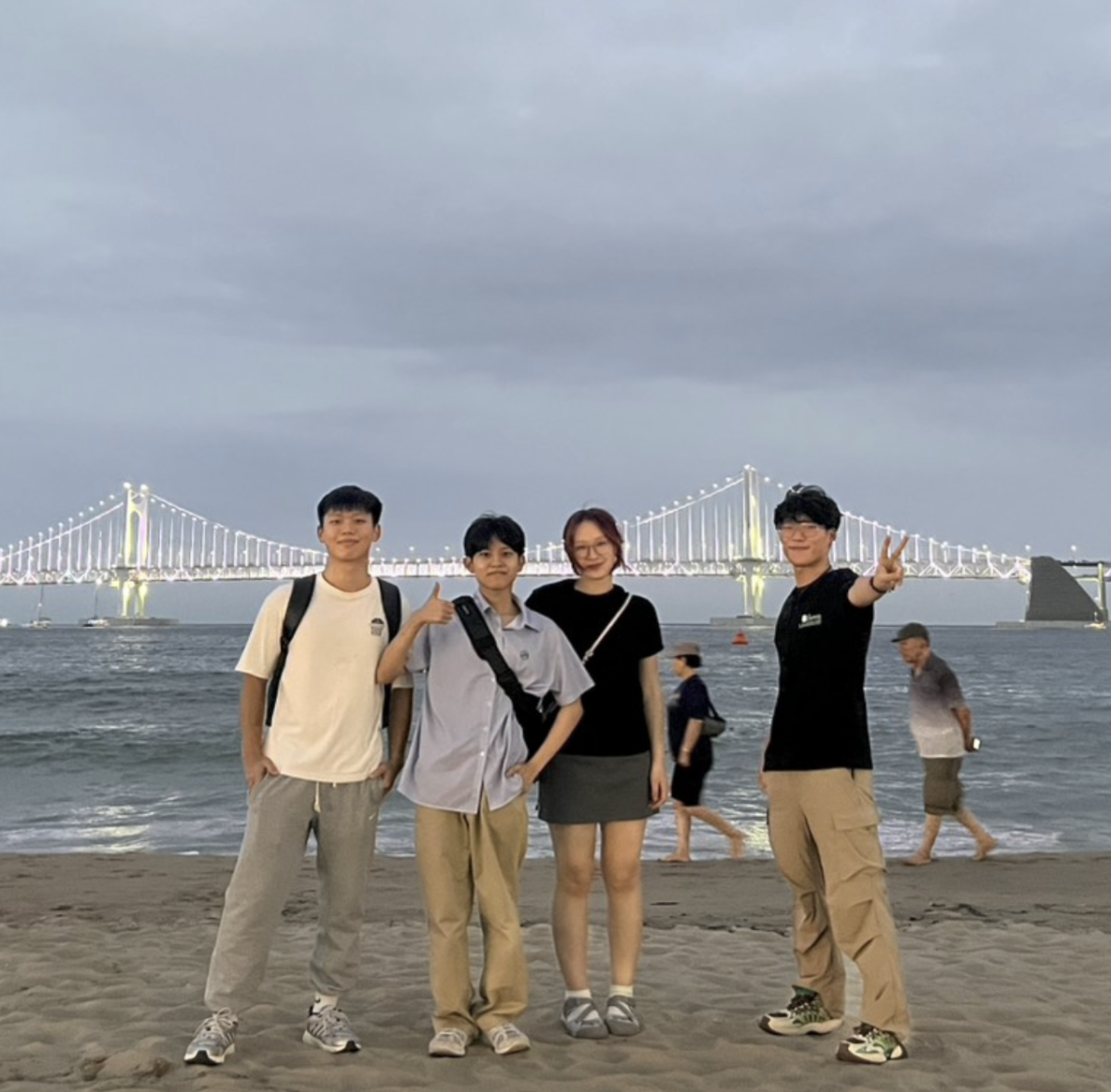
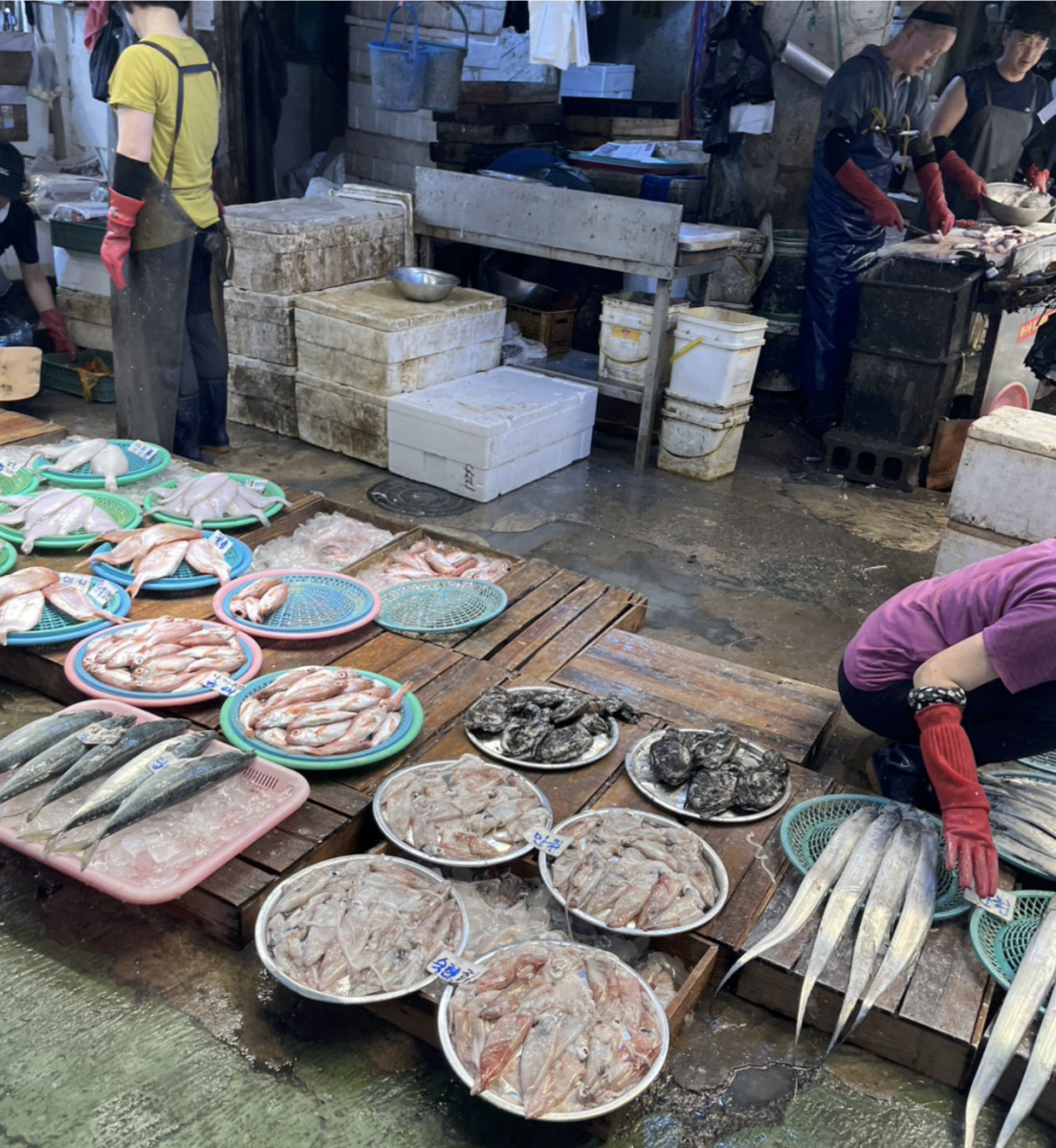
In addition to courses related to fisheries, I also took Korean language classes and cross-cultural understanding courses offered for international students. Furthermore, in the aquaculture course offered for Korean students, I struggled with its fast pace and difficulty level, but I felt I was able to gain a deep understanding of the differences in target fish species and aquaculture methods compared to Japan.
Even within the same field of fisheries science, the way it is approached, discussed, and the distance from the field varies by country and region. I felt it was important to share these differences, respect the other party’s perspective while conveying my own opinions, and find common ground within that process. I feel I have developed the mindset to pause and reconsider how ideas and assumptions I took for granted in Japan behave and influence others when they originate from me.
【What I Learned】
Differences from Japan: More team projects, greater emphasis on output and input.
Advancing while sharing one’s own thoughts and perspective.
Acquired a multifaceted perspective on the relationship between consumption and demand.
Gained experience applying theories and systems learned in Japan to different contexts.
Recognized that my specialized knowledge remains fragmented.
Realized the necessity of integrating theory with practice, and numbers with people, to achieve understanding.
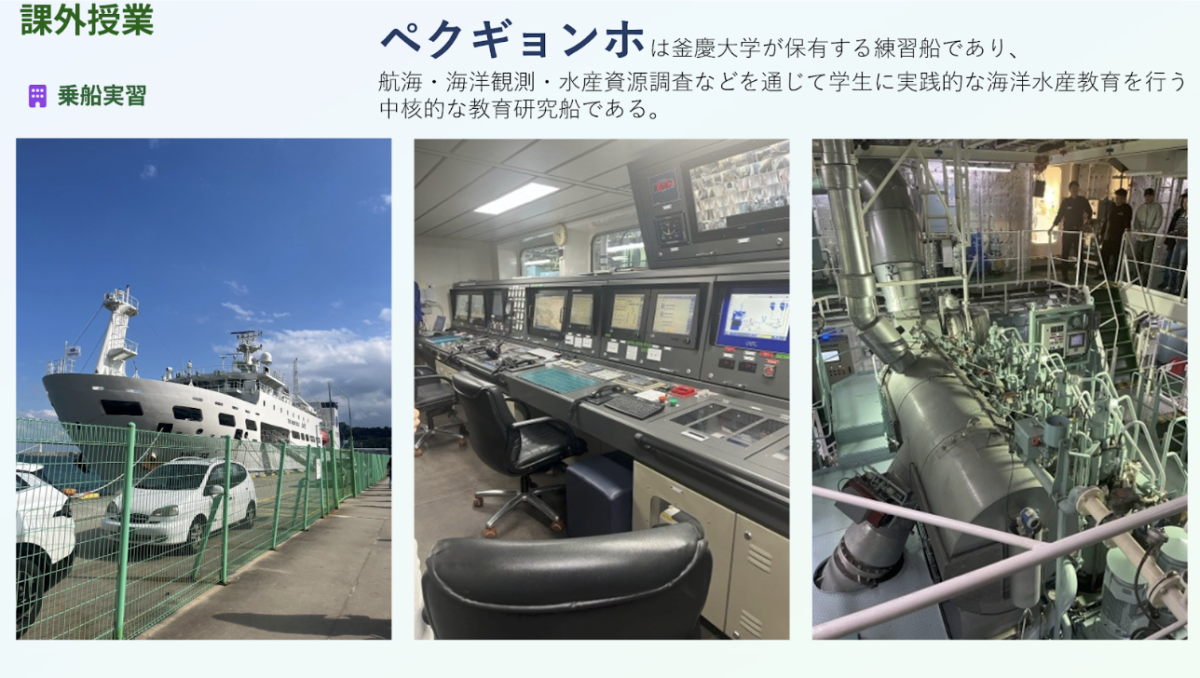
I participated in a boarding training program and stayed on Jeju Island for a week. We used the training ship Baekgyeongho, owned by Pukyong National University. It was larger and far more impressive than the Nagasakimaru. The onboard orientation was extremely valuable, starting with a tour of the engine room and a talk by the chief engineer, followed by discussions with the navigators on deck.
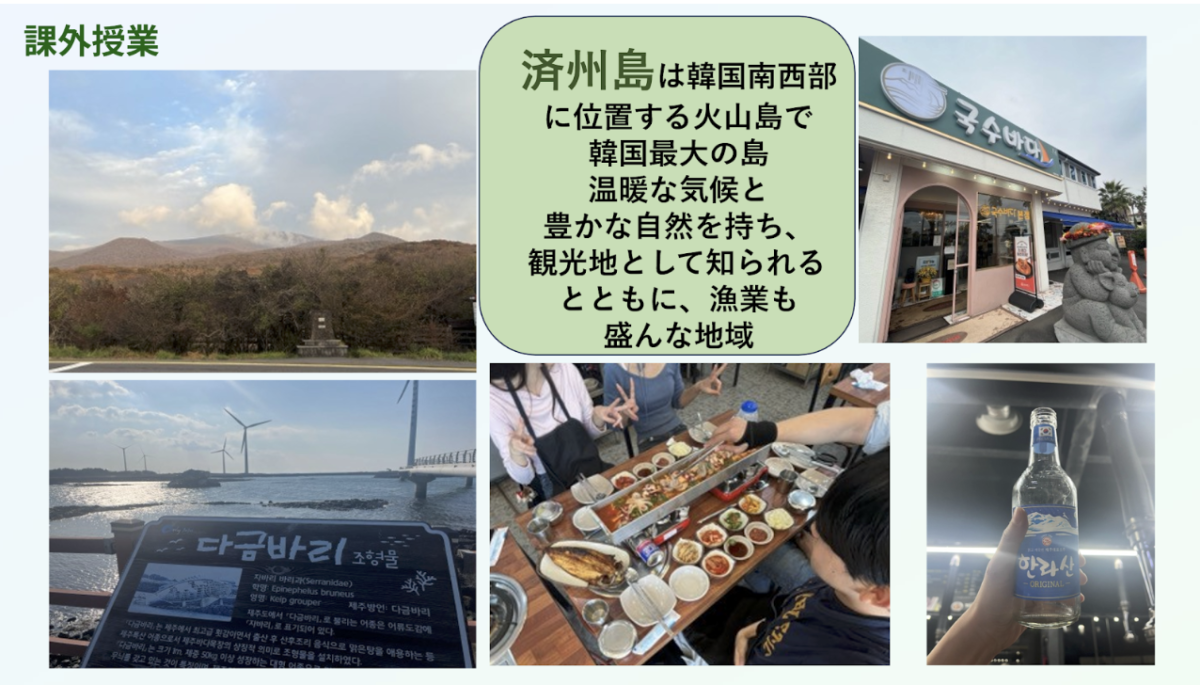
On board, I was the only Japanese person, so all conversations were conducted in Korean or English. My roommates were all kind, and even though communication wasn’t always smooth, I managed to have a good time. Jeju Island is located south of mainland Korea. It’s characterized by natural landscapes formed by volcanic activity and a unique lifestyle surrounded by the sea. It has a slightly different atmosphere and regional character compared to the mainland. Experiencing firsthand how culture and daily rhythms differ even within Korea, depending on the region, was also memorable. After disembarking, we split into groups to tour famous sights, sample local specialties like Hallasan soju (a Jeju-born soju), hairtail fish, and black pork. We also visited the Korea Fisheries Resources Agency and toured a wind power plant alongside the staff. On the final day, we watched short videos produced by each group and held an exchange meeting, making it a truly meaningful onboard training experience.
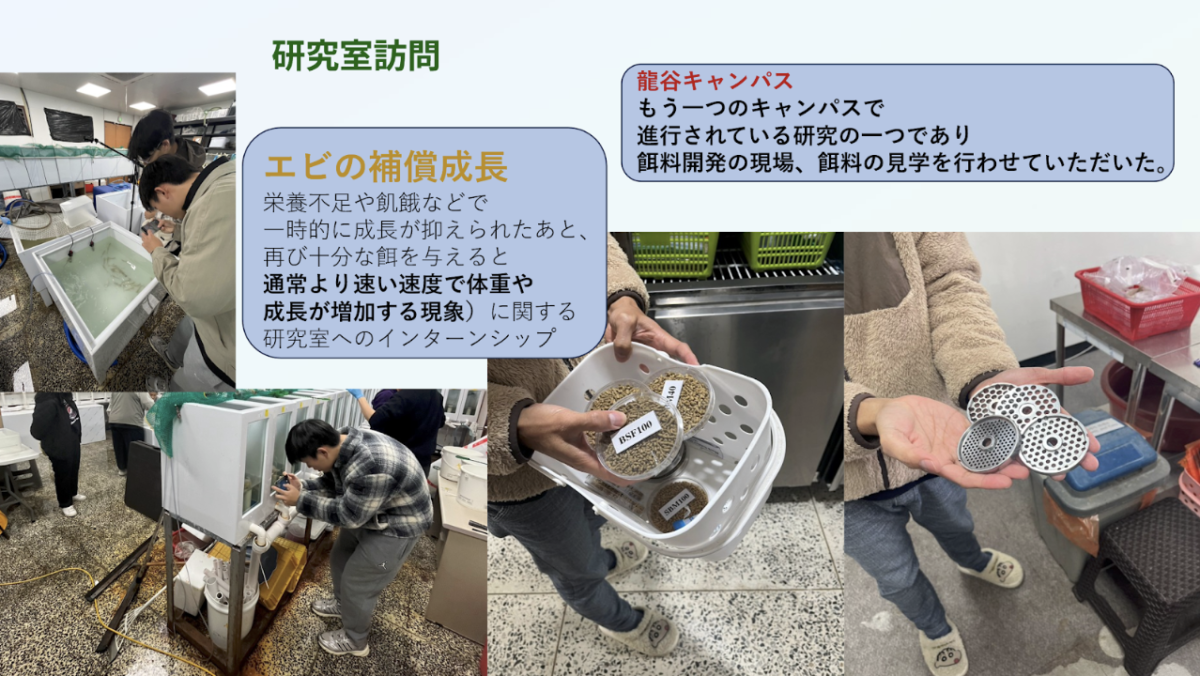
For one week, I had the opportunity to intern at a laboratory at Pukyong National University. This lab was conducting experiments on compensatory growth in shrimp. My activities began with basic tasks like water quality testing and progressed to experiencing dissections of organs related to compensatory growth. Additionally, at the university’s other campus, Yongguk Campus, I observed the development of feed formulations. Being in my third year, this experience allowed me to see how overseas laboratories operate and gave me a tangible sense of what concrete research entails.
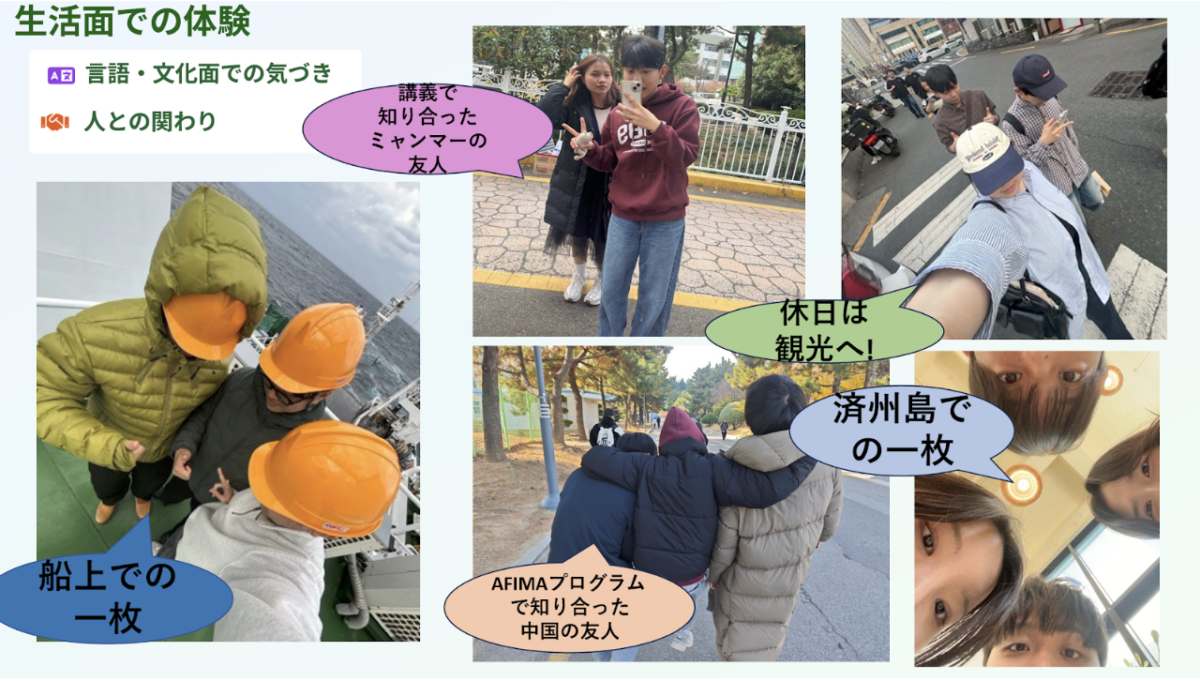
In daily life, what I felt most strongly was my language growth. Especially in Korean, expressions appropriate to the relationship with the other person and the situation are crucial; simply being grammatically correct isn’t enough. I feel that the accumulation of daily shopping, commuting, and simple interactions gradually deepened my understanding of the language. I also interacted with people from China, Malaysia, Myanmar, and Europe. What proved universally important was “having your own thoughts” and “the attitude of trying to listen to the other person.” Being overly talkative wasn’t always the right approach; often, the very act of trying to understand the other person’s intentions fostered trust. It wasn’t just the lectures; sharing meals, hanging out together—each of those moments became something new and irreplaceable within me.
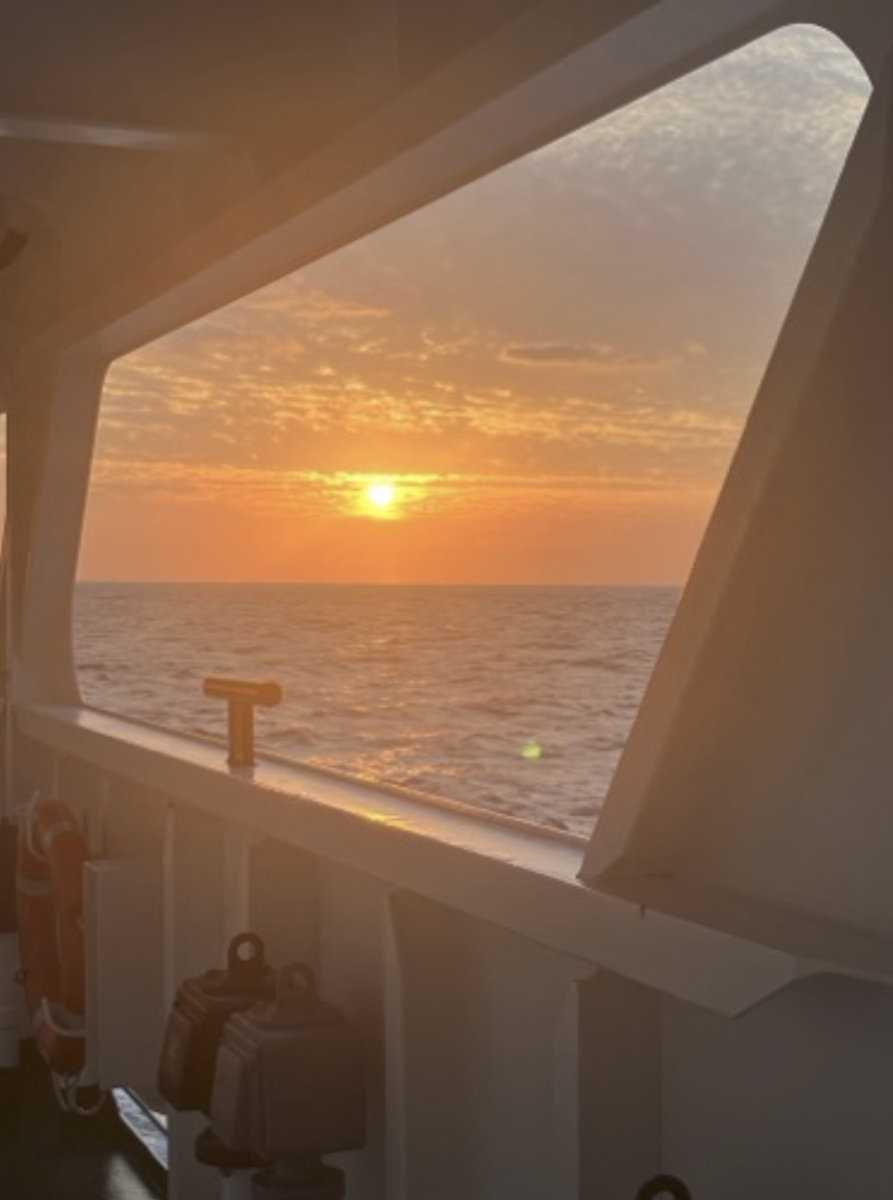
Through this study abroad experience, I believe the most significant change within myself was developing a mindset to take on challenges without hesitation. I repeatedly experienced that moving forward with only a vague understanding, not just in language or specialized fields but also in daily life, inevitably led to getting stuck somewhere. Therefore, when faced with something I don’t understand or want to try, I’ve developed the resolve to take action if I feel motivated, even if it’s difficult. On the other hand, many challenges remain.
In particular, my ability to accurately explain specialized content in a foreign language is still not sufficient. Moving forward, I believe it is essential to deepen both my language skills and my specialized knowledge simultaneously, without separating them.
In my future studies, I aim to solidify my foundation in fisheries science while also pursuing interdisciplinary learning in fields like economics and regional policy.
Leveraging the perspectives gained from this study abroad experience, I wish to reexamine fisheries in a way that bridges Japan and Korea, or connects regional communities with the international community.
I extend my deepest gratitude to the professors who provided me with this invaluable experience.
Thank you very much.
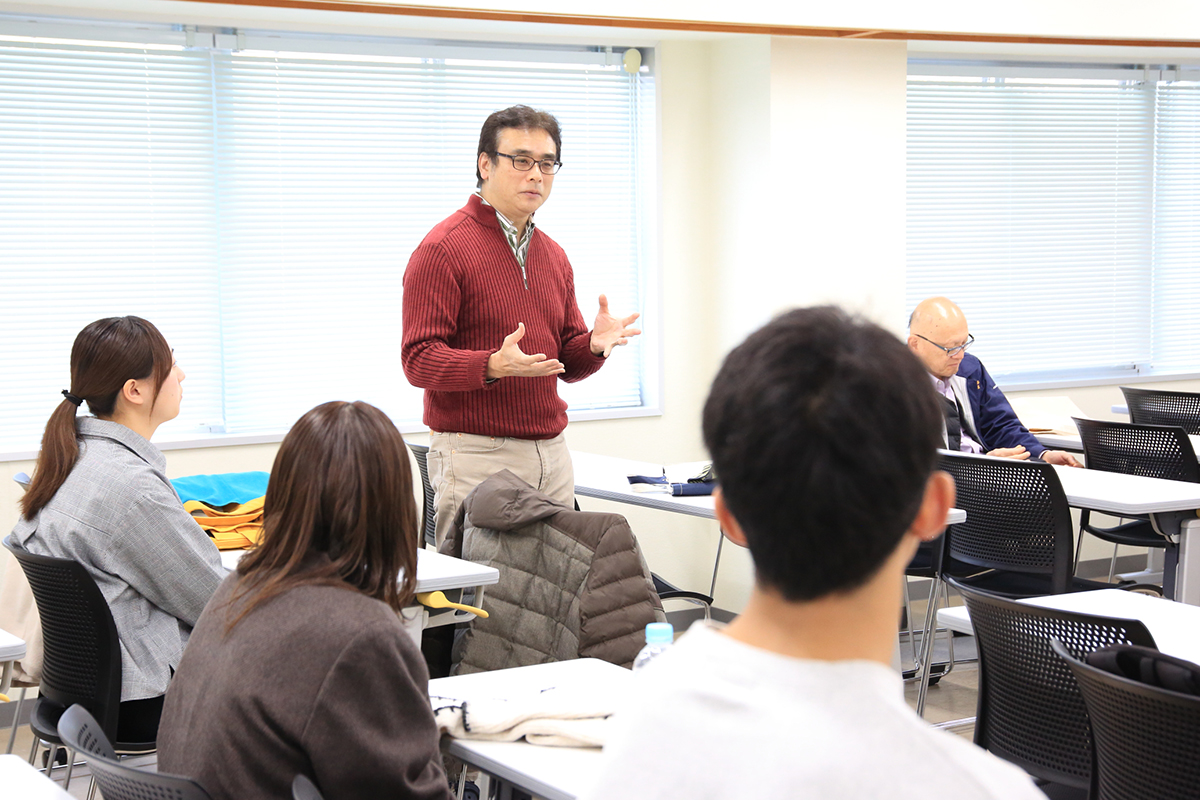
At the end of the presentation session, Professor Kazuaki Kawamoto, Dean of the Graduate School, gave a closing address.
“Thank you all for your excellent presentations. It was clear that you conducted a great deal of research and put significant effort into your work. During your time abroad, some of you expressed a desire to study English more intensively, and others mentioned that you wished you could have spent a longer period engaging in more practical learning experiences. Although this program comes to a close for now, I hope you will continue to foster these connections and gain even more valuable experiences in the future. Thank you very much for today.”